
Business · 6 min read
Your Competitors Are Stealing Your Customers Right Now (Here Is How to Stop Them)
Customers leave quietly for competitors with faster, clearer, more trustworthy sites. Here are the four fundamentals that win them back, with a Philippine lens.

Share

Key takeaways
- Visitors leave without warning when a website is slow, confusing, or hard to trust, usually for a competitor.
- Competitors win online by making it easier for customers to understand, trust, and contact them.
- Speed matters most on mobile data, common in the Philippines, where impatient visitors will not wait for a slow page.
- Clear messaging, professional design, testimonials, case studies, and local contact details build trust fast.
- To fight back, test your site with a real user, benchmark competitors, fix the fundamentals, and track visitor behaviour.
A customer searches for exactly what you sell, finds your website, clicks through, and leaves within seconds. They did not call. They did not fill out your form. They went to a competitor with a faster site, a clearer message, and an easier way to get in touch. This happens quietly, every day, to businesses across the Philippines, and most owners never see it because nobody emails to say they left.
The good news is that this is fixable, and the fix is rarely exotic. Competitors who win online are not always better at the actual work. They are better at one thing: making it easy for a visitor to understand, trust, and contact them. This guide explains where you are losing people and the four fundamentals that win them back. For the full picture on what a serious build costs locally, see our web design cost guide for the Philippines.
Why do potential customers leave your website for competitors?
Visitors leave when a site is slow, confusing, hard to trust, or unclear about the next step. Nobody announces it. They simply close the tab and click the next result, which is usually a competitor whose page loaded faster, explained its value in seconds, looked credible, and made contacting them obvious. The loss is invisible, which is exactly why it persists, but the pattern behind it is consistent enough to act on.
The businesses winning in your market understand that today's buyers are impatient, sceptical, and spoiled for choice. They design their entire online presence around removing friction and earning trust quickly. That is the whole game, and it is one you can play too.
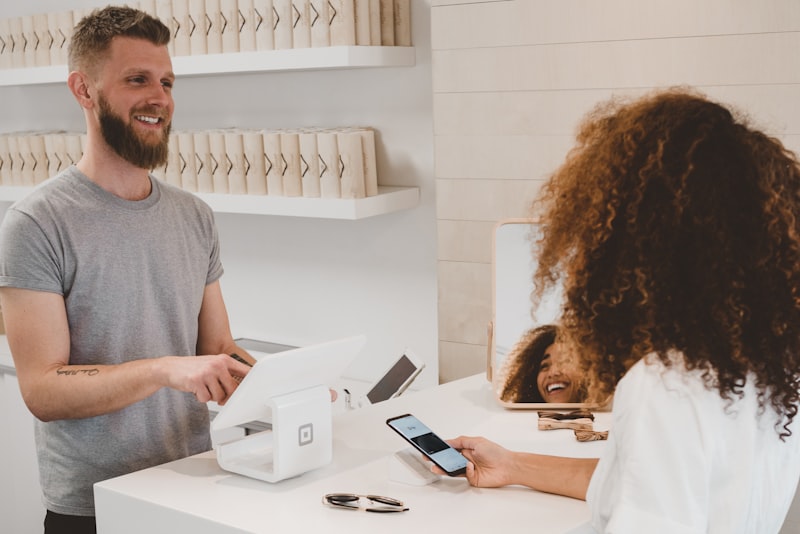
Photo by Brooke Lark on Unsplash
How fast should your website load, and why does it matter?
A fast site keeps people; a slow one sends them to whoever loads first. When your competitor's page appears in a second or two and yours takes five or six, many visitors never wait to see what you offer. Mobile users, who make up the bulk of Philippine web traffic on data connections that are not always strong, are the least patient of all. Speed is not a vanity metric. It is the difference between a visitor reading your message and a visitor reading a competitor's.
Speed is also one of the few advantages you can win decisively and quickly. A site built on lean code, optimised images, and good hosting can outload a competitor stuck on a heavy template, and that head start compounds across every visit. We cover how to fix it in our guide on why your website speed is killing your revenue.
Does your message make sense in five seconds?
Open your own homepage and read it as a stranger would. Can someone tell what you offer and how to take the next step within about five seconds? Then open your top competitor and compare honestly. The clearer message wins almost every time, because a confused visitor does not ask for help. They leave. Specificity beats cleverness: "Custom websites that turn visitors into clients" tells a visitor more than "Innovative digital solutions" ever will. For more on this, read why your website is your most important sales asset.
What trust signals does a business website need?
Online visitors decide whether to trust you almost instantly, and design carries that decision. A clean, current design signals a serious business; a dated or amateur one signals the opposite, fair or not. In the Philippine market, where many first contacts now happen through a search result rather than a referral, the website often is the first impression, so it has to do the reassuring that a personal introduction used to do.
The signals that build trust fast are concrete and within reach. A modern, professional design, real testimonials from named clients, short case studies showing actual work, genuine photography rather than obvious stock images, and clear contact details (a phone number, an email, ideally an address or service area) all tell a visitor you are legitimate. Local payment and contact cues help too: showing GCash or Maya, a Globe or Smart number, and a Manila or Cebu service area makes a Filipino buyer feel they are dealing with someone real and reachable.

Photo by Christina @ wocintechchat.com on Unsplash
How can you tell if your website is losing customers?
Test your site, then benchmark your competitors. Ask someone who has never seen your website to complete a real task, such as "find out how to request a quote" or "figure out what services we offer," and watch silently. Every hesitation is a friction point that is costing you. Then visit your top three competitors, time how fast their pages load, judge how clearly they explain their value, and note their trust signals, being brutally honest about how you compare.
Finally, measure. Install proper analytics so you can see where visitors come from, what they do, and where they drop off. Without measurement you are guessing, and guessing is often how a business ends up behind in the first place. Data turns "I think our site is fine" into a list of specific things to fix.
How do you fix the fundamentals?
Before chasing fancy features, get four basics right, in this order:
- Speed. The site should load quickly, especially on mobile data. This is non-negotiable.
- Clarity. A visitor should understand your value the moment the page loads.
- Trust. Professional design, real testimonials, and clear, local contact details.
- Action. The next step should be obvious and easy to take.
These principles hold whether you are building new or repairing what you have, and we go deeper into the technical side in our guide on building modern websites for performance.
Every day you wait, a competitor's site keeps doing the quiet work of taking the customers who should have been yours. The fix is rarely as expensive as the lost business, and it starts with an honest look at where you stand. If you want that honest look, book a call and we will walk through what it would take for your site to compete, and a transparent quote for the work.
Related service
Web design services in the PhilippinesFrequently asked questions
Why are potential customers leaving my website for competitors?
Visitors leave when a site is slow, confusing, unprofessional, or unclear about the next step. They click the next search result, which is usually a competitor with faster loading, clearer messaging, stronger trust signals, and an easier way to get in touch.
What website issues hurt conversions the most?
Four fundamentals decide it: speed, clarity, trust, and action. A site should load quickly, explain its value instantly, look professional with real trust signals, and make the next step obvious and easy.
How fast should my website load?
Fast enough that visitors do not leave before seeing your message, especially on mobile data, which is how most Filipino visitors browse. A lean, well-built site that loads in a second or two will keep people a slow one loses.
How can I check if my website is losing customers?
Ask someone new to complete a task on your site, such as requesting a quote, and watch where they struggle. Then benchmark your top competitors on load time, messaging, and trust signals, and use analytics to see where visitors drop off.
What trust signals should a business website include?
A clean modern design, real testimonials from named clients, short case studies, genuine photography, and clear contact details. In the Philippines, showing GCash or Maya, a local phone number, and a service area helps buyers feel you are real and reachable.
Let's build something
great together
Have a project in mind? We'd love to hear about it and explore how we can help bring your vision to life.
Get in touchPillar guideBusiness · Feb 22
Content Marketing for Service Businesses: How to Create Blog Content That Generates Leads
Business · Apr 23
AI-Generated Website Content: Legal Risks, SEO Implications, and Best Practices
Business · Apr 20
Lead Magnets for Service Businesses: From PDF Guides to Interactive Tools
Business · Feb 23