Philippines
Websites for real estate developers that sell projects
Project and property showcases built to capture serious buyers, for property developers in the Philippines.

Key takeaways
- A real estate developer website in the Philippines typically ranges from ₱150,000 for a focused project landing page to ₱4,000,000+ for custom inventory, computation, or CRM-connected platforms.
- Developer websites need more than galleries: strong project pages should explain phases, unit types, floor plans, location advantages, amenities, financing context, and next steps.
- Generic templates often struggle with high-value property sales because they do not fit project complexity, buyer qualification, inventory handling, or long decision cycles.
- Lead forms should qualify buyers by project interest, budget, timeline, financing preference, buyer type, and preferred contact channel so sales teams can prioritize follow-up.
- A practical build process starts with sales discovery and content architecture, then moves into UX, design, development, QA, launch, and post-launch optimization based on inquiry data.
How much does a real estate developer website cost in the Philippines?
A real estate developer website in the Philippines typically costs about ₱150,000 to ₱4,000,000+ depending on the number of projects, inventory complexity, integrations, content depth, and whether the site is a marketing website or a custom web application.
A real estate developer website is a project marketing and lead generation platform built for property developers that need to showcase subdivisions, condominiums, house-and-lot projects, preselling inventory, amenities, locations, and buyer inquiry paths in one credible digital experience. For many Philippine developers, the website is not just an online brochure. It is often the first serious checkpoint for OFWs, investors, brokers, end-users, and families comparing projects before they talk to sales.
The table below gives practical market ranges for planning. These are typical estimates in the Philippine market, not exact quotes for every developer, because scope, content, integrations, and review cycles can change the budget significantly.
| Website type | Typical Philippine market range | Approx. USD | Best fit |
|---|---|---|---|
| Single-project landing page | ₱150,000 to ₱350,000 | US$2,700 to US$6,300 | One condominium, subdivision, or preselling project that needs a focused campaign site |
| Custom project showcase website | ₱350,000 to ₱800,000 | US$6,300 to US$14,300 | Developer with several phases, floor plans, amenities, location content, and lead capture |
| Multi-project developer website | ₱800,000 to ₱1,800,000 | US$14,300 to US$32,100 | Developer with multiple developments, property categories, broker pages, and structured content management |
| Website with inventory, computations, or CRM integration | ₱1,500,000 to ₱4,000,000+ | US$26,800 to US$71,400+ | Developers needing unit availability, payment estimates, reservation flows, or connected sales systems |
| Ongoing support, hosting, SEO, and updates | ₱25,000 to ₱150,000+ per month | US$450 to US$2,700+ | Teams that need continuous improvements, content updates, analytics, maintenance, and campaign support |
The biggest cost drivers are the number of project pages, the quality of visual assets, the complexity of unit availability data, the number of languages or buyer segments, and the level of integration with sales tools. A brochure-style site costs less than a system that connects forms, inventory, buyer qualifications, broker assignments, and analytics.
For a broader breakdown of local website budgets, see our guide to web design cost in the Philippines or the detailed pricing discussion in how much a custom website costs. If you already have project materials and want a realistic scope, you can book a free consultation and share your current website, brochures, or sales process.
What should a real estate developer website include?
A real estate developer website should include clear project pages, phase details, location information, unit options, floor plans, amenities, financing guidance, trust signals, and strong lead capture paths for serious buyers.
Philippine property buyers usually compare developments across price, location, payment terms, developer credibility, turnover expectations, amenities, and long-term value. A developer website should help them answer those questions without forcing them to message a sales agent for basic information. The site should still encourage inquiry, but it should qualify the buyer before the sales conversation starts.
The most important pages are project pages. Each project page should explain what the development is, where it is located, who it is for, what unit or lot types are available, what the lifestyle promise is, and what the next step should be. If the development has several phases, towers, blocks, or clusters, the website should make those differences understandable.
A useful developer website usually needs these core components:
- Project pages with location, overview, unit types, phase details, amenities, and visual assets.
- Floor plan and lot plan sections that are easy to view on mobile phones.
- Lead forms that capture budget, preferred project, buyer type, financing interest, and timeline.
- Location content with nearby landmarks, transport links, schools, hospitals, malls, and business districts.
- Financing or payment computation guidance, even if final numbers must still be verified by sales.
- Content management tools so your team can update availability notes, project descriptions, and campaign pages.
Strong project pages are especially important in the Philippines because many buyers are not physically near the property. OFWs, overseas Filipino families, Metro Manila investors buying in provincial growth areas, and provincial buyers considering Manila or Cebu developments often need more detail before booking a viewing.
For developers comparing a broader real estate website scope, our real estate website design Philippines page explains how property websites differ for brokers, agencies, developers, and property managers.
Why do generic templates underperform for high-value property sales?
Generic templates often underperform for property developers because high-value real estate purchases require trust, project clarity, buyer qualification, and local context that basic templates rarely handle well.
A template can look acceptable on the surface, especially if the project has strong renders and lifestyle photography. The problem appears when the buyer needs specific information: Which units are still available? What is the difference between Tower 1 and Tower 2? Is the location near a transport corridor? What is the likely payment path? Who should inquire if the buyer is an OFW, investor, broker, or end-user?
High-value property sales also involve longer decision cycles than ordinary online purchases. A buyer may visit the same website several times, share pages with family members, compare payment terms, and ask an agent for clarification weeks later. A generic layout that treats every project page like a simple gallery does not support that decision process well.
| Approach | Strength | Common limitation | Better use case |
|---|---|---|---|
| Generic website template | Lower upfront cost and faster visual setup | Weak fit for project phases, inventory logic, qualified lead capture, and developer branding | Small campaign sites with limited scope and short-term use |
| WordPress theme with property plugins | Familiar admin tools and many plugin choices | Plugin conflicts, slower performance, and rigid data structures can become issues as projects grow | Simple listings or small real estate teams |
| Custom Next.js or React website | Flexible structure, fast user experience, custom lead flows, and scalable project architecture | Higher planning and build cost than a template | Developers with multiple projects, serious paid campaigns, or long-term digital sales needs |
A custom website lets the content structure follow how buyers actually compare property. A condominium project may need tower comparisons, unit mix filtering, parking information, payment term explanations, and amenity zoning. A horizontal development may need lot cuts, village phases, access roads, nearby establishments, and house model comparisons.
Studio Aurora builds custom modern websites on a Next.js and React stack, which is useful when a developer needs performance, structured content, and a front end that can evolve with campaigns. The technical choice matters because paid traffic, SEO pages, campaign landing pages, and future integrations work better when the website is not fighting a rigid theme.
For a deeper comparison of custom builds and template builders, read custom web development vs template builders.
How should a developer website capture and qualify serious buyers?
A developer website should capture and qualify serious buyers by asking the right questions at the right moment, then routing inquiries into a process that sales teams can act on quickly.
Lead capture is not only a contact form with name, email, and phone number. For a property developer, a qualified inquiry often needs context: preferred project, budget range, desired unit type, purchase purpose, financing preference, target move-in or investment timeline, and whether the buyer is local or overseas. A better form creates a more useful first conversation for both the buyer and the sales team.
The best lead paths are tied to intent. A buyer viewing a floor plan may be ready to ask about availability. A buyer reading about bank financing may need help estimating monthly payments. A buyer comparing amenities may be earlier in the journey. A developer website should match calls to action with these different levels of readiness.
A practical lead qualification flow starts with buyer intent. A project inquiry form can ask for the buyer's preferred project, budget range, purchase timeline, financing plan, and preferred contact channel. A downloadable brochure form can ask fewer questions because the buyer may still be researching. A site tour request can ask more detailed questions because the buyer is closer to a sales conversation.
Philippine developers also need to think about inquiry routing. A lead from an OFW in Dubai may need a different follow-up cadence than a buyer requesting a weekend site visit in Cavite, Pampanga, Cebu, Iloilo, Davao, or Metro Manila. A broker inquiry may need a separate path from a direct end-user inquiry.
A website can support serious sales follow-up by connecting inquiry forms to email, spreadsheets, CRMs, or a more structured real estate sales system. If your team needs pipeline tracking, broker assignment, and follow-up visibility, our real estate CRM Philippines page explains how CRM tools can support property sales teams.
Want this done right, without the guesswork?
Book a free call and we'll map out exactly how we'd approach your project.
How should project pages present units, pricing, floor plans, and availability?
Project pages should present units, pricing, floor plans, and availability in a way that is clear enough for buyer evaluation while still allowing the sales team to confirm final terms and inventory.
Philippine property pricing can change because of promos, reservation status, floor premiums, view premiums, payment scheme differences, and inventory movement. A website does not always need to publish a full live price list, especially when sales policies require confirmation. The website should still give enough pricing context to prevent poor-fit inquiries and help serious buyers self-select.
A clear unit section can show model names, approximate sizes, number of bedrooms, typical use cases, indicative price range, sample monthly terms, and downloadable or viewable floor plans. Floor plans should be readable on mobile because many property buyers browse on Facebook, Messenger, Viber, or Google before visiting the full website.
Availability can be handled at several levels of sophistication. A simple website might show status labels such as available, limited, sold out, or inquire for updated inventory. A more advanced website can connect to an internal source of truth, display block or tower-level availability, or support reservation workflows after sales verification.
Developers should decide early how much operational data the public website should expose. Publishing exact inventory can help urgency and transparency, but stale inventory damages trust if units appear available when they are already reserved. If your organization needs tighter control of units, tenants, ownership records, or project operations, a real estate management system in the Philippines may be more appropriate than a marketing-only website.
The best choice is often staged. Launch the marketing website first with structured project pages and qualified inquiries, then integrate inventory, CRM, or internal tools once the sales process is clear. A staged approach avoids overbuilding features before the team knows how buyers and agents will actually use them.
How does SEO work for real estate developer websites in the Philippines?
SEO for a real estate developer website works by creating indexable, location-specific, project-specific, and buyer-intent content that helps search engines understand each development and match it to relevant property searches.
Real estate SEO in the Philippines is usually local and intent-driven. Buyers search for terms like condo in Ortigas, house and lot in Cavite, preselling condo in Cebu, lot for sale in Pampanga, beachfront property Batangas, or subdivision near Clark. A developer website should have dedicated pages that give search engines enough context to understand location, property type, amenities, nearby landmarks, and buyer fit.
A project page should not rely only on images. Renders and videos help persuasion, but search engines need text, structured headings, descriptive copy, internal links, alt text, and fast page performance. A beautiful image-heavy page with thin content may fail to rank because search engines cannot confidently determine what the project offers.
Useful SEO content for developer websites can include location guides, project comparisons, financing explainers, turnover updates, construction milestone pages, investment area guides, and FAQs for OFW buyers. The content should be factual and specific, not generic filler. A page about a Cavite house-and-lot project should discuss access roads, nearby cities, schools, employment zones, and lifestyle considerations that matter to buyers.
Technical SEO also matters because property websites often have large images, galleries, maps, scripts, and tracking pixels. Slow pages can hurt both rankings and paid campaign conversion. A Next.js website can help with performance when images, routing, metadata, and page structure are handled carefully.
If your current developer website is not getting impressions or inquiries from organic search, our guide on why your website does not show up on Google explains the common technical and content issues that block visibility.
What is the development process for a real estate developer website?
The development process for a real estate developer website should move from sales discovery and content architecture to design, development, content loading, testing, launch, and post-launch improvement.
A property developer website has more moving parts than a standard company website because the content must satisfy marketing, sales, legal, broker relations, and buyer education. Good planning prevents the site from becoming a gallery with missing information or a complicated system that the team cannot maintain.
| Phase | Typical duration | What happens |
|---|---|---|
| Discovery and scope | 1 to 3 weeks | Define buyer segments, projects, required pages, lead flows, integrations, and content responsibilities |
| Information architecture and UX | 1 to 3 weeks | Map project pages, navigation, forms, comparison paths, and mobile experience |
| Visual design | 2 to 5 weeks | Design key pages, project templates, lead capture sections, and responsive layouts |
| Development | 4 to 12+ weeks | Build the Next.js or React front end, CMS structure, forms, analytics, and integrations |
| Content loading and QA | 2 to 6 weeks | Add copy, images, floor plans, metadata, test forms, check devices, and validate performance |
| Launch and optimization | Ongoing | Monitor inquiries, improve pages, refine forms, add SEO content, and support campaigns |
Content preparation is often the slowest part of the project. Developers may have brochures, renders, floor plans, maps, and price sheets in different formats, but those materials still need to be translated into web pages that are understandable, searchable, and easy to update. Early content auditing helps uncover missing items before design and development are delayed.
Legal and compliance review should also be planned. Real estate marketing materials may need approvals for pricing statements, permits, project names, disclaimers, payment terms, and availability language. A practical website process gives reviewers time to check important claims before launch.
After launch, the most useful improvements usually come from real inquiry data. If many buyers ask the same financing question, the page may need clearer payment content. If paid traffic clicks the floor plan section but does not inquire, the call to action may need adjustment. If OFW buyers visit at unusual hours, automated response flows and clear next steps can help sales teams respond better.
If you want a realistic build plan for your project pipeline, you can tell us about your project and share the number of developments, pages, integrations, and assets you already have.
What should Philippine developers prepare before hiring a web design team?
Philippine developers should prepare project details, brand guidelines, visual assets, sales workflows, content owners, and integration requirements before hiring a web design team.
A good website partner can help structure the work, but the developer still needs to provide accurate project information. The website cannot invent unit details, legal language, location claims, or payment terms. Preparing the right materials early reduces revisions and helps the build stay aligned with sales goals.
Before starting, gather the following:
- Project list with names, locations, property types, phases, and target buyers.
- Existing brochures, renders, photography, videos, maps, master plans, and floor plans.
- Approved brand assets, logo files, color rules, typography, and campaign guidelines.
- Sales process details, including who receives leads, how fast follow-up happens, and what qualifies a serious buyer.
- Pricing policy, availability policy, disclaimers, permits, and approved wording for claims.
- Required tools such as CRM, email marketing, analytics, live chat, map embeds, or inventory sources.
The right web design team should ask specific questions about your sales process, not just visual preferences. A developer website must connect marketing presentation with lead handling, because a polished page does not help much if inquiries disappear into untracked inboxes.
When evaluating vendors, ask how they handle performance, mobile UX, content management, analytics, SEO structure, form routing, and post-launch support. You can also read our guide on how to choose a web design agency if you are comparing proposals from agencies, freelancers, or in-house developers.
Studio Aurora works with businesses in the Philippines and worldwide as a remote-first web design and development studio. For real estate developers, our focus is building custom websites that make projects clearer, capture better-fit inquiries, and give internal teams a stronger platform for ongoing campaigns. To discuss a developer website for your next project or portfolio, book a free consultation.
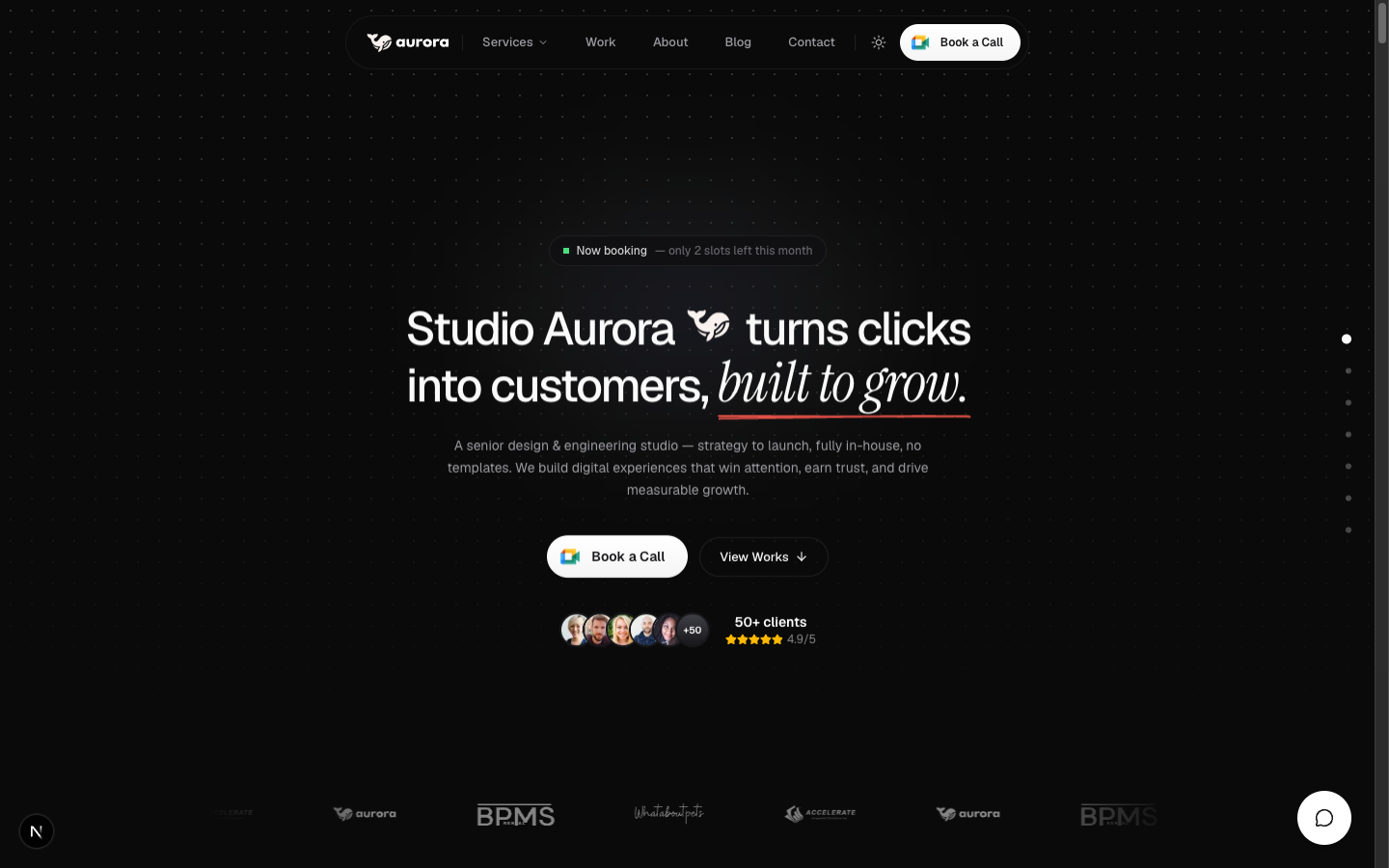
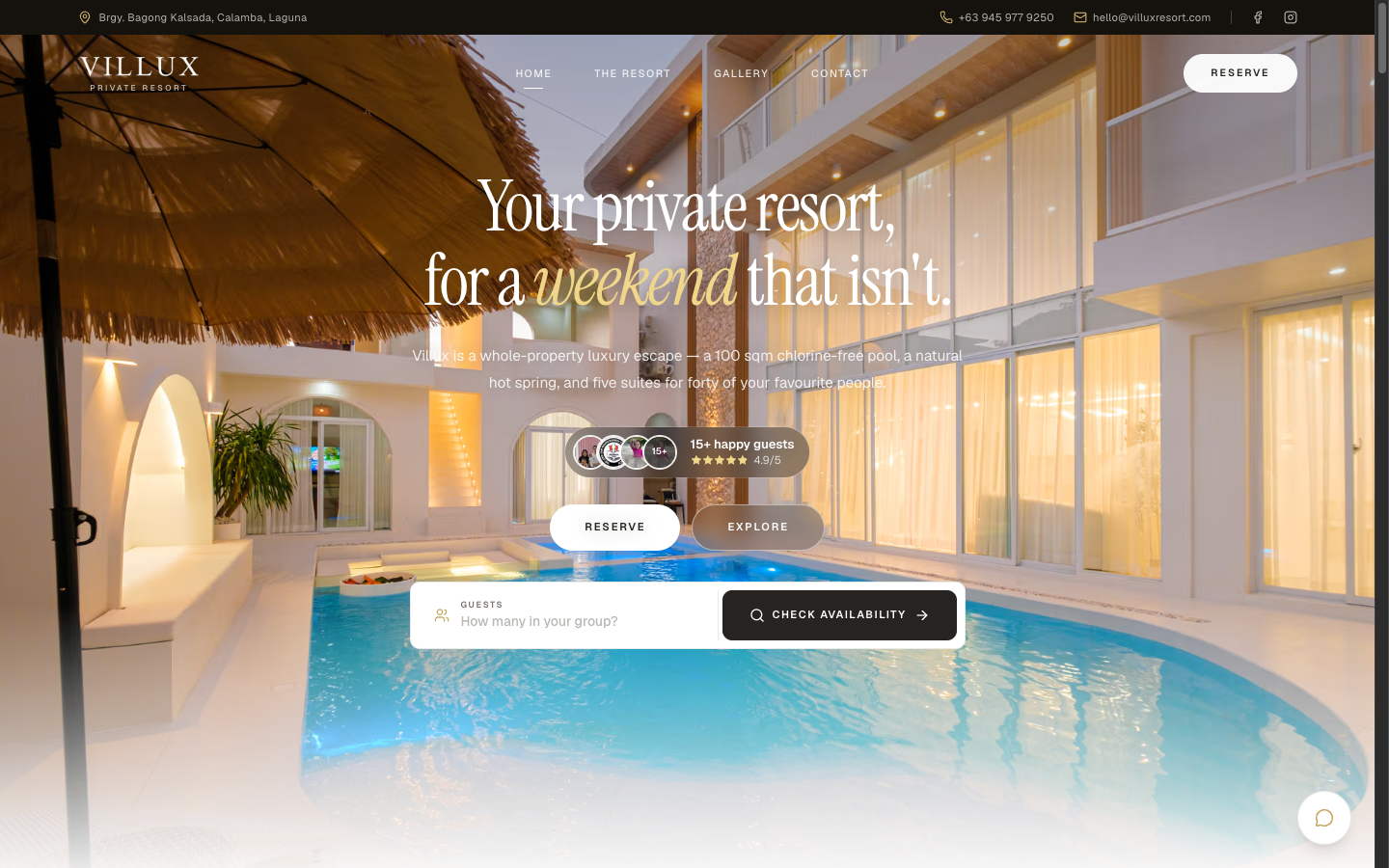
Selected work

Frequently asked questions
How much does a real estate developer website cost in the Philippines?
A real estate developer website in the Philippines typically costs ₱150,000 to ₱4,000,000+ depending on scope. A single-project landing page may cost ₱150,000 to ₱350,000, while a multi-project website with inventory, computations, or CRM integration can reach ₱1,500,000 to ₱4,000,000+.
What is the difference between a real estate developer website and a broker website?
A real estate developer website usually focuses on owned projects, phases, units, amenities, location, financing guidance, and brand credibility. A broker website usually focuses on listing multiple properties from different sellers or developers and may prioritize search filters and agent inquiry routing.
Should a developer website show exact unit prices?
A developer website can show exact prices if the sales team can keep them accurate, but many developers use indicative ranges or sample computations because promos, floor premiums, availability, and payment terms change. The important point is to give enough pricing context to qualify buyers without publishing stale information.
Can a real estate developer website connect to a CRM?
Yes, a developer website can connect inquiry forms to a CRM so leads are tracked, assigned, and followed up properly. CRM integration is useful when the sales team handles multiple projects, broker channels, OFW inquiries, and different buyer timelines.
How long does it take to build a real estate developer website?
A focused single-project website may take around 6 to 10 weeks if content is ready. A larger multi-project developer website with custom CMS structures, CRM integration, inventory logic, and extensive QA may take 3 to 6 months or longer.
Do Philippine real estate developers need SEO for project websites?
Yes, SEO is useful because buyers search by location, property type, project name, nearby landmarks, and financing questions. Developer websites should have indexable project pages, location-specific content, fast performance, descriptive metadata, and useful buyer FAQs.
Is a template website enough for a property developer?
A template website may be enough for a short campaign or very simple project, but it often becomes limiting for developers with multiple phases, unit types, availability rules, broker inquiries, paid campaigns, and long-term SEO goals. Custom development is usually a better fit when the website supports serious sales operations.
What materials should a developer prepare before starting a website project?
A developer should prepare project names, locations, phase details, floor plans, renders, photography, videos, brand guidelines, approved sales copy, pricing policy, disclaimers, permits, lead routing rules, and any CRM or analytics requirements before starting.
Explore more
Web Design Philippines
Studio Aurora designs and builds high-converting websites for businesses across the Philippines. Modern, fast, and engineered to turn visitors into customers, not just look pretty.
Web Design Manila
Manila moves fast and the competition is fierce. Studio Aurora builds websites that help Metro Manila businesses stand out, load instantly, and convert the traffic they're already paying for.
Web Design Cebu
Cebu's businesses are growing fast, in tourism, retail, services, and tech. Studio Aurora builds modern, high-converting websites that help Cebu brands compete locally and reach customers nationwide.
Web Design Agency Philippines
Freelancers vanish. Templates age. Studio Aurora is a web design agency that delivers senior design and development, a real process, and a site you actually own, for businesses across the Philippines.

Let's build something that works.
Tell us about your project and we'll map out exactly how we'd approach it. No pressure, no jargon.