Philippines
MVP development to validate and raise, fast
A lean, credible first version of your product, built quickly without the tech debt that slows you down later.

Key takeaways
- A credible MVP in the Philippines commonly costs ₱450,000 to ₱2,500,000 and takes about 8 to 16 weeks, depending on complexity.
- An MVP is a usable first product that validates the core business assumption, not a full platform with every roadmap feature.
- The best MVP scope focuses on one user, one painful problem, one primary workflow, and one measurable outcome.
- Fast MVP development should protect foundational decisions such as data structure, authentication, permissions, and deployment.
- A strong MVP should support the next phase of product growth through clean architecture, analytics, and a clear post-launch roadmap.
MVP development in the Philippines: cost, timeline, and fit
MVP development in the Philippines typically costs about ₱450,000 to ₱2,500,000 for a credible software product and often takes 8 to 16 weeks, depending on scope, integrations, design depth, and how ready the product requirements are.
An MVP is a minimum viable product, which means the smallest real version of a product that lets users experience the core value and gives founders evidence for what to build next. A good MVP is not a cheap throwaway demo. It is a focused first release that can validate demand, support fundraising conversations, and create a technical base that can grow without forcing an immediate rebuild.
For Philippine startups, an MVP often has to satisfy two audiences at once: early users who need a working solution, and investors or partners who need to believe the team can execute. The right scope is usually narrower than founders expect. The product should prove the riskiest assumption first, such as whether businesses will pay for automated workflows, whether customers will complete a booking flow, or whether teams will adopt a dashboard instead of spreadsheets.
Studio Aurora builds MVPs for founders in the Philippines and abroad using a modern React and Next.js stack, with attention to speed, product clarity, and conversion. If your idea is already shaped but not yet scoped into a buildable first version, you can book a free consultation to discuss what should be in the MVP and what should wait.
What an MVP is, and what it is not
An MVP is a usable first product that tests the core business assumption with real users, not a half-finished version of every feature in the long-term roadmap.
The word minimum is often misunderstood. Minimum does not mean careless, ugly, or technically fragile. Minimum means every feature has to earn its place because it directly supports validation, revenue, onboarding, or learning.
The word viable is just as important. A viable MVP must work reliably enough that users can complete the main task without a founder manually rescuing every step. It should have enough trust signals, security basics, and product polish to make feedback meaningful.
| Product stage | What it is for | Typical output | When it makes sense |
|---|---|---|---|
| Prototype | Testing a concept visually | Clickable mockups or simple demo screens | Before code, when the flow is still uncertain |
| MVP | Validating a core product with real users | Working application with the essential workflow | When you need usage, revenue, or investor-ready proof |
| Beta | Improving a broader product before public release | More complete product with selected testers | When the MVP has shown enough demand |
| Version 1 | Launching a more complete commercial product | Mature product with refined features and operations | When the product model is already clearer |
A prototype can answer whether the interface makes sense, but an MVP answers whether people will actually use the product under real conditions. A landing page can test interest, but an MVP tests behavior. A full platform can support a wider vision, but it can also delay validation if the first version tries to do too much.
A Philippine MVP for a marketplace, booking tool, SaaS dashboard, internal automation app, or customer portal should usually include login, one complete core workflow, basic admin controls, analytics, and enough design quality to feel credible. It should not include every future role, every edge-case automation, or every integration on the first release.
How to scope ruthlessly to the core value
The best MVP scope is built around one user, one painful problem, and one measurable outcome.
Ruthless scoping is a product discipline, not a cost-cutting exercise. The goal is to identify the shortest path between a user problem and a product experience that proves value. If a feature does not help a user reach that outcome or help the founder learn something important, it should probably move to a later release.
A useful MVP scoping question is: what is the single action that must happen for the product to matter? In a booking product, that action may be a completed reservation. In a B2B SaaS tool, it may be a generated report or approved workflow. In a marketplace, it may be a successful match between supply and demand.
A lean MVP scope usually includes:
- One primary user journey from start to finish
- One or two user roles, such as customer and admin
- Manual or semi-manual operations where automation is not yet proven
- Basic payments, notifications, or integrations only when they are core to validation
- Product analytics so founder decisions are based on behavior, not guesses
The hardest scoping decisions are often emotional. Founders naturally want the MVP to express the whole vision, especially when pitching to investors. A stronger approach is to communicate the vision in the deck while building only the product slice that proves the market wants the core value.
Studio Aurora typically helps founders separate must-have validation features from investor-demo polish and later-stage platform features. If your project is closer to a broader business system than a startup MVP, our custom software development in the Philippines page explains how larger operational platforms are planned and built.
Building fast without crippling tech debt
A fast MVP should use simple architecture, disciplined engineering, and clear product priorities so the product can launch quickly without becoming expensive to maintain.
Tech debt is not automatically bad. Some shortcuts are sensible when the goal is to validate a risky idea before investing heavily. The problem is uncontrolled debt, where rushed decisions make basic changes slow, create security risks, or force a rebuild before the product has had time to learn from users.
A healthy MVP separates temporary decisions from foundational decisions. Temporary decisions may include manual admin steps, limited reporting, or fewer account roles. Foundational decisions include database structure, authentication, permissions, payment handling, code organization, and deployment approach. The foundation should be clean even when the feature set is small.
For example, a founder may not need a fully automated billing engine in the MVP, but the product should still store users, plans, transactions, and access rules in a way that can support proper billing later. A founder may not need every dashboard filter at launch, but the data model should not make reporting impossible after users arrive.
Custom MVP development is usually a better fit than template builders when the product depends on unique workflows, role-based access, integrations, or proprietary business logic. Template tools can be useful for marketing sites and very simple validation tests, but they often become restrictive once the product needs differentiated software behavior. For a deeper comparison, read our guide on custom web development versus template builders.
Fast development is safest when the team documents the intended tradeoffs. A founder should know which features are production-ready, which are intentionally simple, and which assumptions need user feedback before deeper investment. Clear tradeoffs make the MVP easier to explain to investors and easier to improve after launch.
Want this done right, without the guesswork?
Book a free call and we'll map out exactly how we'd approach your project.
Our MVP stack and rapid development process
Studio Aurora uses a modern Next.js and React-based stack for MVPs because it supports fast interfaces, scalable product architecture, and strong user experience across web applications.
Next.js is a React framework for building fast, modern web products with server-side rendering, API routes, and production-friendly deployment patterns. React is a front-end library that helps create interactive user interfaces with reusable components. Together, they are a practical fit for MVPs that need to look credible, move quickly, and support future product growth.
The exact backend and database choices depend on the product. Many MVPs use PostgreSQL, API-driven services, managed authentication, cloud hosting, and carefully selected third-party tools for payments, email, file storage, and analytics. The goal is not to use fashionable tools. The goal is to choose a stack that reduces build time while keeping the product maintainable.
A typical MVP process includes:
- Product discovery to define the user, problem, success metric, and release scope
- UX planning to map the core flow before investing in full UI design
- Interface design focused on trust, clarity, and conversion
- Agile development with regular reviews of working software
- Launch preparation covering QA, analytics, deployment, and next-step planning
The process should create momentum without hiding uncertainty. Early in the project, the priority is making the right product smaller. During development, the priority is turning that scope into a stable and testable release. After launch, the priority is learning from real usage rather than adding features by instinct.
MVPs that involve dashboards, portals, booking engines, SaaS workflows, or internal tools often overlap with web application development in the Philippines. MVPs intended to become subscription products may also benefit from the planning patterns covered on our SaaS development Philippines page.
MVP development cost and timeline in the Philippines
MVP development in the Philippines typically ranges from ₱450,000 to ₱2,500,000, roughly USD $8,000 to $45,000, with timelines commonly ranging from 8 to 16 weeks for a focused first release.
Pricing varies because MVPs can differ dramatically in complexity. A single-workflow internal tool is not the same as a multi-role SaaS product with payments, reporting, and third-party integrations. A polished investor-ready MVP also requires more product design, QA, and launch preparation than a bare technical proof of concept.
The following ranges are general Philippine market estimates, not exact quotes or claims about any specific Studio Aurora project. They are useful for early budgeting and for comparing options before a detailed scope is prepared.
| MVP type | Typical scope | Typical timeline | Typical Philippine market range |
|---|---|---|---|
| Lean validation MVP | One core workflow, basic UI, simple admin, limited integrations | 6 to 10 weeks | ₱450,000 to ₱900,000, about $8,000 to $16,000 |
| Investor-ready MVP | Stronger UX/UI, authentication, dashboard, analytics, payments or key integrations | 10 to 14 weeks | ₱900,000 to ₱1,600,000, about $16,000 to $29,000 |
| Complex product MVP | Multiple roles, advanced workflows, integrations, reporting, stronger security requirements | 14 to 20 weeks | ₱1,600,000 to ₱2,500,000+, about $29,000 to $45,000+ |
The cheapest MVP is not always the lowest-risk option. A very low budget may produce something that looks incomplete, cannot support user testing, or needs to be rebuilt before fundraising. A responsible budget should cover product thinking, UX, engineering, QA, deployment, and a small amount of post-launch support.
Some founders compare MVP pricing with website pricing, but the two are not the same. A marketing website mainly presents information and converts visitors into leads. An MVP is software that usually includes accounts, data, workflows, permissions, and ongoing product logic. If you are comparing budgets, our Philippine website cost guide and our detailed article on custom website pricing can help separate website costs from software product costs.
A realistic timeline depends on decision speed as much as engineering speed. Founders can shorten delivery by providing clear product priorities, fast feedback, brand assets, sample data, and access to required accounts such as payment gateways or email services. If you want a practical budget and timeline for your idea, you can tell us about your MVP project and we will help identify the leanest credible first release.
Choosing between a freelancer, an agency, and an in-house build
The right MVP team depends on your risk level, budget, timeline, and whether you need product strategy as much as code.
Freelancers can be a good fit for narrow MVPs when the founder already has clear requirements and technical oversight. Agencies are usually a better fit when the MVP needs product scoping, UX, frontend, backend, QA, and launch support in one coordinated process. In-house teams make sense when the company has funding, long-term product leadership, and enough ongoing work to justify hiring.
| Option | Best fit | Strength | Main risk |
|---|---|---|---|
| Freelancer | Small, well-defined feature set | Lower cost and flexible engagement | Quality and continuity depend heavily on one person |
| Agency or studio | Founder needs product, design, engineering, and launch support | Coordinated delivery and broader expertise | Higher upfront cost than a solo freelancer |
| In-house team | Funded startup with long-term roadmap | Deep product ownership over time | Slower and more expensive to assemble early |
| No-code or low-code | Testing a simple workflow or internal process | Very fast for basic validation | Can become limiting for custom logic or scale |
Philippine founders should also consider communication style, documentation, and post-launch availability. MVPs change quickly after real users arrive, so the first team should leave behind clean code, clear handover notes, and an architecture that another developer can understand.
A warning sign is any proposal that jumps straight into coding without clarifying the riskiest assumption. Another warning sign is a scope that includes every roadmap feature but no analytics, feedback loop, or launch plan. A stronger MVP partner will challenge scope because validation requires focus.
If you are comparing vendors, our guide on finding the right website developer without getting burned is useful even for software projects because many evaluation principles are the same: clarity, communication, portfolio relevance, process, and ownership terms.
The path from MVP to a scaled product
The path from MVP to a scaled product should move from validation, to iteration, to platform hardening, instead of adding features randomly after launch.
After the MVP goes live, the most important question is not whether the product is finished. The important question is what user behavior proves or disproves the business assumption. Founders should review activation, retention, conversion, support requests, failed tasks, and qualitative feedback before committing to the next major build phase.
A sensible post-MVP roadmap often starts with fixing friction in the core workflow. If users sign up but do not complete the main action, onboarding may matter more than new features. If users complete the main action but do not return, the product may need alerts, saved state, collaboration, or clearer recurring value. If users love the workflow but operations are manual behind the scenes, automation may become the next priority.
The next phase usually falls into one of three categories. Product iteration improves the user experience and conversion. Technical hardening improves performance, security, permissions, testing, and maintainability. Business scaling adds pricing, billing, integrations, reporting, team management, and operational tools.
A strong MVP should make the second phase easier. It should have a codebase that can be extended, data that can be analyzed, and a product structure that supports real learning. It does not need to anticipate every future feature, but it should avoid decisions that block obvious next steps.
Studio Aurora approaches MVP development as the first stage of a product, not as a disposable side project. If you are preparing to validate a startup idea, build an investor-ready first version, or turn a manual service into software, the next step is to book a free MVP consultation and discuss the smallest credible product worth building.
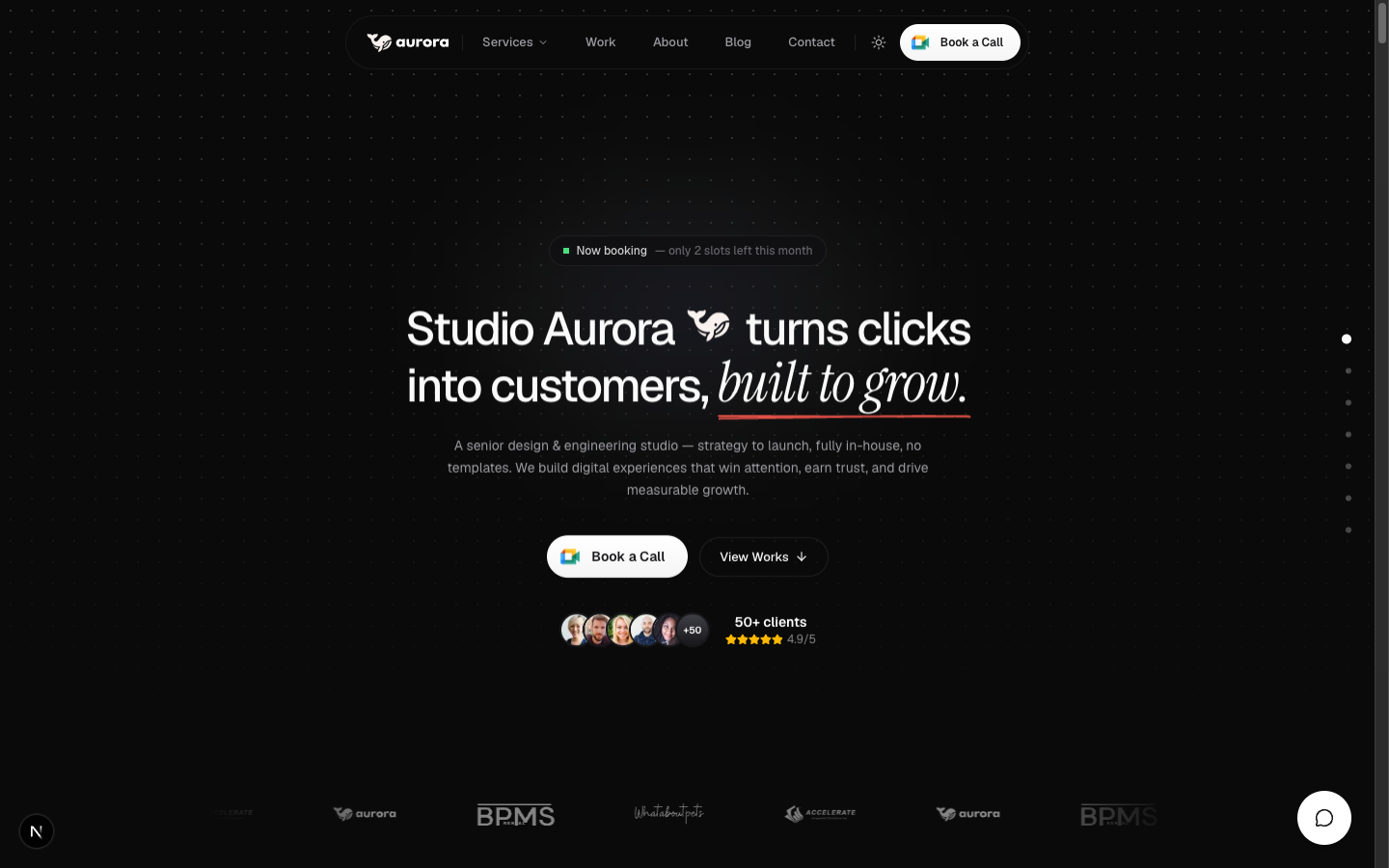
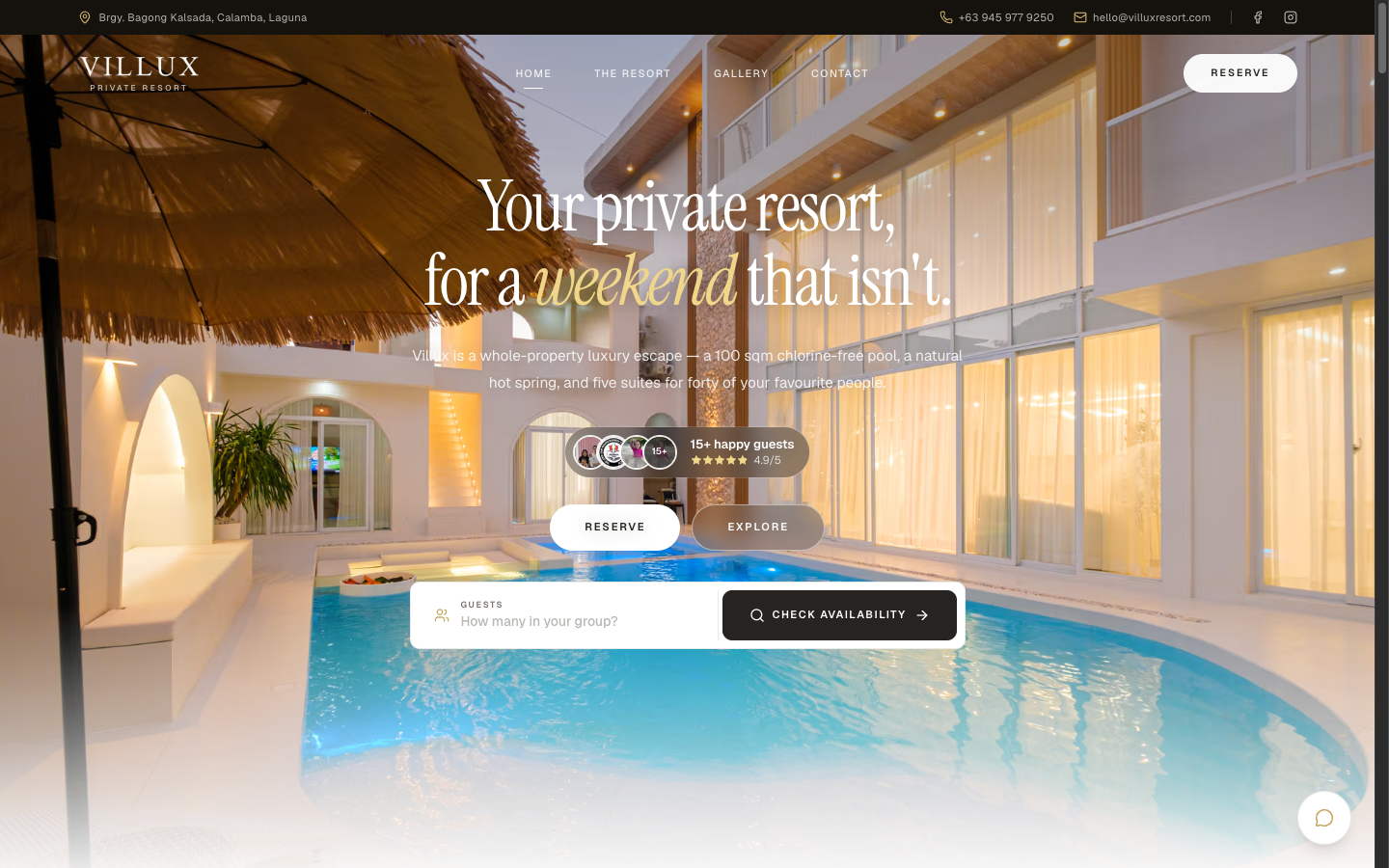
Selected work

Frequently asked questions
How much does MVP development cost in the Philippines?
MVP development in the Philippines typically ranges from ₱450,000 to ₱2,500,000, roughly USD $8,000 to $45,000. A lean validation MVP may sit near the lower end, while a multi-role SaaS or marketplace MVP with integrations, payments, and reporting will cost more.
How long does it take to build an MVP?
A focused MVP usually takes 8 to 16 weeks from discovery to launch. Simpler products can sometimes be built in 6 to 10 weeks, while complex MVPs with multiple roles, third-party integrations, and advanced workflows may take 14 to 20 weeks or more.
What should be included in an MVP?
An MVP should include the smallest complete workflow that proves the product's core value. Common inclusions are authentication, the main user journey, basic admin controls, essential integrations, analytics, and enough UI quality to make user feedback meaningful.
What should not be included in an MVP?
An MVP should usually avoid nonessential roadmap features, advanced automations that can be handled manually at first, multiple user types that are not needed for validation, and complex reporting that does not affect early decisions. Features should be cut if they do not help validate demand or support the first users.
Is an MVP the same as a prototype?
No. A prototype is usually a clickable design or demo used to test an idea before development. An MVP is a working product that real users can interact with, allowing founders to measure behavior, collect feedback, and validate whether the product should continue.
Can an MVP help with fundraising?
Yes, an MVP can support fundraising when it demonstrates that the founder can execute, that users understand the product, and that the core workflow has real potential. An MVP does not guarantee investment, but it can make a pitch more credible than slides alone.
Should I build my MVP with no-code tools or custom development?
No-code tools can be useful for simple workflow tests, landing pages, and internal experiments. Custom development is usually better when the MVP needs unique workflows, role-based access, payments, proprietary logic, integrations, or a codebase that can become the foundation of a larger product.
What happens after the MVP launches?
After launch, the next step is to study user behavior, fix friction in the core workflow, and decide which features are justified by real evidence. The product may then move into iteration, technical hardening, automation, or a larger version 1 build.
Explore more
Web Design Philippines
Studio Aurora designs and builds high-converting websites for businesses across the Philippines. Modern, fast, and engineered to turn visitors into customers, not just look pretty.
Web Design Manila
Manila moves fast and the competition is fierce. Studio Aurora builds websites that help Metro Manila businesses stand out, load instantly, and convert the traffic they're already paying for.
Web Design Cebu
Cebu's businesses are growing fast, in tourism, retail, services, and tech. Studio Aurora builds modern, high-converting websites that help Cebu brands compete locally and reach customers nationwide.
Web Design Agency Philippines
Freelancers vanish. Templates age. Studio Aurora is a web design agency that delivers senior design and development, a real process, and a site you actually own, for businesses across the Philippines.

Let's build something that works.
Tell us about your project and we'll map out exactly how we'd approach it. No pressure, no jargon.