Philippines
Web application development that fits how you work
Custom web apps, dashboards, and internal tools on a modern stack, for businesses that have outgrown spreadsheets and templates.

Key takeaways
- Web application development is browser-based software for workflows, dashboards, portals, and data management, while a standard website mainly publishes content and generates inquiries.
- Typical custom web application development in the Philippines ranges from about ₱250,000 to ₱2,500,000+ or roughly $4,500 to $45,000+ depending on scope.
- Common web app projects include internal tools, customer portals, booking platforms, SaaS-style products, dashboards, and integrations with third-party systems.
- A modern Next.js, React, TypeScript, and Postgres or Supabase stack is practical for maintainable custom web apps serving Philippine and international users.
- A focused first version is usually better than an oversized launch because web apps can be improved through phases after the core workflow is proven.
What is web application development in the Philippines?
Web application development is the planning, design, engineering, and support of browser-based software, and a custom business web app in the Philippines commonly ranges from about ₱250,000 to ₱2,500,000+ depending on scope, integrations, and security needs.
A web application is software that runs in a web browser and lets users log in, create records, complete workflows, view dashboards, manage data, or interact with business systems. A website is usually built to present information, generate inquiries, sell products, or publish content. The difference is not the URL or the visual design, but the depth of functionality behind the interface.
For Philippine businesses, web applications often replace fragile spreadsheets, manual approvals, shared inboxes, and disconnected tools. A custom dashboard can show operations data in one place. A customer portal can let clients submit requests, view documents, or track status without messaging staff. An internal tool can standardize how teams handle bookings, inventory, leads, jobs, renewals, or reports.
Studio Aurora builds custom web apps for businesses in the Philippines and clients worldwide using a modern Next.js and React stack. The goal is not to build software for its own sake. The goal is to create a practical system that fits the way your team works, reduces avoidable manual effort, and gives the business better visibility into day-to-day operations.
A typical small internal tool may start around the low hundreds of thousands of pesos, while a more advanced platform with authentication, user roles, database design, file handling, payment flows, third-party integrations, and admin dashboards can move into seven-figure PHP budgets. International clients often think in USD, so a practical planning range is roughly $4,500 to $45,000+ for many custom web application projects.
Web application vs website: what is the real difference?
A website primarily publishes content or drives inquiries, while a web application helps users complete tasks, manage data, and operate a process inside the browser.
A marketing website is the right tool when the business needs visibility, trust, SEO pages, lead capture, service pages, landing pages, or a content hub. A web application is the right tool when the business needs accounts, permissions, dashboards, workflows, calculations, approvals, customer-specific data, or an admin system. Many businesses eventually need both: a public-facing website for growth and a private web application for operations.
| Comparison point | Website | Web application |
|---|---|---|
| Main purpose | Inform, attract, convert, publish | Manage workflows, data, users, and operations |
| Typical users | Visitors, prospects, customers | Staff, admins, customers, partners, vendors |
| Login required | Usually optional or absent | Often required |
| Data complexity | Contact forms, CMS content, basic analytics | Structured database, records, permissions, reports |
| Common examples | Company site, service pages, landing pages, blog | Booking platform, CRM, dashboard, portal, internal tool |
| Success metric | Leads, sales, inquiries, search visibility | Time saved, fewer errors, process visibility, user adoption |
A business can start with a strong website and later add application features when operations become more complex. For example, a real estate company may begin with property listings and inquiry forms, then later add agent dashboards, viewing schedules, inventory tracking, and document workflows. A clinic may begin with service pages and appointment inquiries, then later add patient request tracking or admin-side scheduling tools.
If your current priority is a public marketing site rather than business software, our guide to web design cost in the Philippines may be a better starting point. If your need is broader than a web app and includes business systems planning, our custom software development Philippines page explains the wider software strategy.
What kinds of custom web apps can a Philippine business build?
Philippine businesses can build custom web apps for dashboards, customer portals, booking systems, operations platforms, SaaS-style products, and internal tools that are too specific for off-the-shelf software.
A dashboard web app gives owners, managers, or teams a clear view of key data without manually combining spreadsheet tabs. A dashboard may show sales activity, booking volume, job status, property availability, inventory movement, support requests, or staff workload. The most useful dashboards are not decorative charts, but decision tools connected to the information a team already uses.
A customer portal gives clients a secure place to access their own information, submit requests, download documents, track progress, or communicate through structured forms. For service businesses, portals can reduce repetitive messages because customers can see status without asking the same question. For B2B companies, portals can also create a more professional client experience than email threads and attachments.
An operations platform brings several internal workflows into one browser-based system. A logistics, property, healthcare, education, or professional services company may need a system for records, assignments, approvals, schedules, notes, files, and reporting. A custom app can be designed around the actual process instead of forcing staff to adapt to generic software.
Common custom web application builds include:
- Admin dashboards for sales, bookings, inventory, leads, or support tickets
- Customer portals for documents, account status, requests, and updates
- Internal tools for approvals, scheduling, reporting, and task management
- SaaS-style applications with subscriptions, user accounts, and role-based access
- Integration layers that connect forms, databases, payments, CRMs, and third-party APIs
A startup founder building a new software product may need a SaaS architecture, subscription billing, onboarding flows, and analytics from the start. A business validating a new idea may need a smaller first version before investing in a full platform. For product-focused builds, see our pages on SaaS development in the Philippines and MVP development in the Philippines.
What technology stack does Studio Aurora use for web apps?
Studio Aurora typically builds modern web applications with Next.js, React, TypeScript, and database tools such as Postgres or Supabase, because this stack supports fast interfaces, maintainable code, and scalable application architecture.
Next.js is a React framework for building production-grade web applications with routing, server rendering, API routes, performance features, and deployment flexibility. React is a JavaScript library for building interactive user interfaces that can handle complex dashboards, forms, filters, tables, and state changes. TypeScript adds stricter structure to JavaScript, which helps reduce avoidable bugs as an application grows.
Postgres is a mature relational database commonly used for applications that need structured data, reporting, relationships, and reliability. Supabase is a developer platform built around Postgres that can help with authentication, database access, file storage, and real-time features. The right setup depends on the project, but the principle is consistent: choose stable tools that make the app easier to maintain after launch.
A web app stack is not just a list of technologies. A serious build also needs data modeling, authentication, authorization, environment management, validation, backups, deployment workflow, error monitoring, and performance planning. These details rarely appear in a visual mockup, but they strongly affect whether the application is reliable enough for real business use.
The stack should also fit the team that will maintain the product. A modern JavaScript and TypeScript stack is practical in the Philippine market because it is widely used, well documented, and supported by a large developer ecosystem. If your business later hires an internal developer or another vendor, a clear, conventional architecture is easier to transfer than a highly unusual setup.
If you are comparing vendors, the article on how to find the right website developer without getting burned is useful even for web app projects because the same due diligence applies: clarify scope, ownership, communication, maintenance, and technical handover before work starts.
How does the web app development process work?
A practical web application process moves from discovery to scope, UX design, technical architecture, development, testing, launch, and post-launch support in clear milestones.
Discovery starts with understanding the workflow the app needs to support. A good discovery conversation asks what happens before, during, and after the process, who uses the system, what data is created, who approves what, where errors happen, and which tools already exist. The goal is to translate business operations into screens, data structures, permissions, and user actions.
Scope definition turns the idea into a buildable first version. A focused first version is usually better than trying to automate every edge case immediately. A web app can grow through phases, but the first release should solve a complete and valuable workflow rather than becoming a collection of unfinished features.
| Phase | Typical output | Practical purpose |
|---|---|---|
| Discovery and workflow mapping | Requirements, user roles, process notes | Clarifies what the app must actually do |
| UX and interface planning | Wireframes, key screens, user flows | Makes workflows visible before code is written |
| Technical planning | Data model, integrations, architecture choices | Reduces rework and implementation surprises |
| Development | Working application features | Builds the approved workflows in code |
| Testing and QA | Bug fixes, validation checks, device testing | Improves reliability before launch |
| Launch and support | Deployment, handover, monitoring, iteration plan | Moves the app into real business use |
Testing matters because web apps handle real user actions and business data. A form that looks correct can still fail if validation is weak, permissions are wrong, or edge cases are not handled. A dashboard can mislead decision-makers if data calculations are unclear. A secure admin panel can become risky if user roles are too broad.
A realistic process also includes change management. Staff may need training, old spreadsheets may need cleanup, and managers may need to decide which workflow becomes the new source of truth. Software adoption is easier when the app reflects actual work patterns instead of imposing unnecessary complexity.
If you already know the workflow you want to improve, you can book a free consultation and describe the current process, the users involved, and the problems you want the web app to solve.
Want this done right, without the guesswork?
Book a free call and we'll map out exactly how we'd approach your project.
How much does web application development cost in the Philippines?
Custom web application development in the Philippines typically costs around ₱250,000 to ₱2,500,000+ or about $4,500 to $45,000+ depending on feature depth, design complexity, integrations, security, and the amount of custom backend logic required.
Web app pricing is scope-driven because two applications with similar-looking screens can have very different technical requirements. A simple admin dashboard with a few tables and filters is not the same as a multi-role platform with payments, file uploads, activity logs, notifications, API integrations, and complex reporting. Cost depends on how much logic the system needs to support, not just how many pages are visible.
| Scope tier | Typical PHP range | Approx. USD range | Common inclusions |
|---|---|---|---|
| Small internal tool or dashboard | ₱250,000 to ₱600,000 | $4,500 to $10,500 | Login, basic database, admin screens, simple reports, limited workflows |
| Mid-sized custom web app | ₱600,000 to ₱1,500,000 | $10,500 to $26,500 | Multiple user roles, structured workflows, custom UI, file handling, notifications, integrations |
| Advanced platform or SaaS-style app | ₱1,500,000 to ₱2,500,000+ | $26,500 to $45,000+ | Subscription logic, complex permissions, advanced reporting, API integrations, audit trails, scaling considerations |
| Ongoing support and iteration | ₱25,000 to ₱150,000+ per month | $450 to $2,700+ per month | Maintenance, improvements, monitoring, bug fixes, feature updates |
These are general market planning ranges, not exact quotes for any specific client. A proper estimate requires a defined feature list, user roles, data requirements, integration requirements, and launch expectations. A vendor should be able to explain what is included, what is excluded, and what assumptions the estimate depends on.
Timelines usually follow the same pattern. A focused internal tool may take 6 to 10 weeks. A mid-sized business application may take 10 to 20 weeks. A more advanced SaaS-style platform may take several months, especially if the product needs billing, onboarding, analytics, data migration, and a polished customer-facing experience.
Cost can rise when the app needs complex integrations with payment gateways, CRMs, property systems, accounting tools, logistics platforms, or legacy databases. Cost can also rise when there are strict compliance, audit, uptime, or security requirements. A discovery phase is valuable because it identifies these issues before the project becomes expensive to change.
For a broader view of Philippine digital project pricing, read our detailed breakdown on how much a custom website costs. If you are comparing hiring models, the page on hiring a web developer in the Philippines can help you understand when a developer, freelancer, or studio makes sense.
When do you need a web app instead of a website?
You need a web app instead of a standard website when users must log in, manage data, complete workflows, or interact with a system rather than simply read content or submit a basic inquiry.
A common sign is that your team relies on spreadsheets that have become operationally important but difficult to control. If a spreadsheet determines schedules, stock, bookings, client status, project stages, or commission tracking, it may already be acting like unofficial software. The risk is that spreadsheets usually lack reliable permissions, validation, audit trails, and structured workflows.
Another sign is that staff repeat the same manual coordination every day. If people copy information between emails, forms, chat apps, spreadsheets, and accounting tools, a custom app may reduce duplication and mistakes. Automation does not need to replace human judgment. It can simply move information to the right place at the right time.
You may need a web app when:
- Customers or staff need secure accounts with different permissions
- Managers need live dashboards instead of manual weekly reports
- The business process has approvals, assignments, status changes, or notifications
- Existing SaaS tools do not match your workflow or require too many workarounds
- Your team needs one reliable source of truth for records, files, and activity history
A standard website is still the better choice when the goal is brand visibility, content publishing, search traffic, landing pages, and lead generation. Many businesses should improve their website before funding custom software if they do not yet have consistent demand. Custom software works best when there is a clear operational problem worth solving.
If you are unsure whether your need is a website, a web app, or a phased combination of both, you can tell us about your project and we can help separate marketing requirements from application requirements.
How should you compare web application developers in the Philippines?
You should compare Philippine web application developers by their ability to understand workflows, design usable interfaces, build maintainable code, communicate clearly, and support the app after launch.
Web application development is different from simple page building because the developer must think through rules, states, permissions, data, and failure cases. A visually clean interface is important, but a beautiful dashboard is not enough if the data model is weak or the workflow is confusing. The best partner asks detailed questions before estimating because unclear requirements create expensive assumptions.
| Option | Best for | Watch-outs |
|---|---|---|
| Freelancer | Small tools, limited scope, tight budgets | Availability, documentation, long-term support, specialist gaps |
| In-house developer | Continuous product work and daily iteration | Hiring cost, management overhead, skill coverage |
| Studio or small agency | Custom apps needing design, frontend, backend, QA, and project structure | Higher cost than a solo freelancer, scope must be managed carefully |
| Large agency or enterprise vendor | Complex procurement, enterprise systems, multiple departments | Higher overhead, slower process, less flexibility for smaller teams |
A good technical partner should be willing to discuss trade-offs. Some features should be built custom because they are central to the business. Other features can be handled by proven third-party tools, especially payments, email delivery, analytics, maps, authentication, or customer support. Smart development is not about custom-building everything. Smart development is choosing where custom work creates real advantage.
Ownership is also important. The business should understand who owns the code, where the app is hosted, who controls the domain and accounts, what happens if the relationship ends, and how maintenance is handled. A professional project should not trap a client inside unclear credentials or undocumented systems.
The article on custom web development vs template builders explains why custom work costs more than templates and when the extra investment is justified. For vendor selection, our guide to choosing a web design agency and spotting red flags is also relevant to application projects because warning signs often appear before contracts are signed.
What is the best next step for a custom web app project?
The best next step for a custom web app project is to document the workflow, identify the users and must-have features, then discuss a realistic first version before asking for a final quote.
A useful project brief does not need to be long. It should explain the current problem, who experiences it, what tools are currently used, what data needs to be stored, which users need access, and what a successful first release would accomplish. Screenshots of spreadsheets, sample reports, forms, and existing tools can help a development team understand the real operating context quickly.
A practical first version should be narrow enough to launch and complete enough to matter. For example, an internal booking tool may begin with admin login, booking records, customer details, status tracking, calendar views, and basic reports. Later phases can add payment reconciliation, SMS reminders, customer accounts, integrations, or advanced analytics once the core workflow is proven.
A clear brief should include:
- The workflow you want to improve or replace
- The user types, such as admin, staff, manager, customer, or partner
- The data the app must store, display, import, or export
- The systems the app may need to connect with
- The deadline, budget range, and decision process
Studio Aurora works with Philippine and international clients on custom web apps, dashboards, portals, and internal tools using a modern Next.js and React stack. We can help you define the first version, identify technical risks, and plan a build that fits your budget and operations. To start the conversation, book a free consultation and share what your team is currently doing with spreadsheets, templates, or disconnected tools.
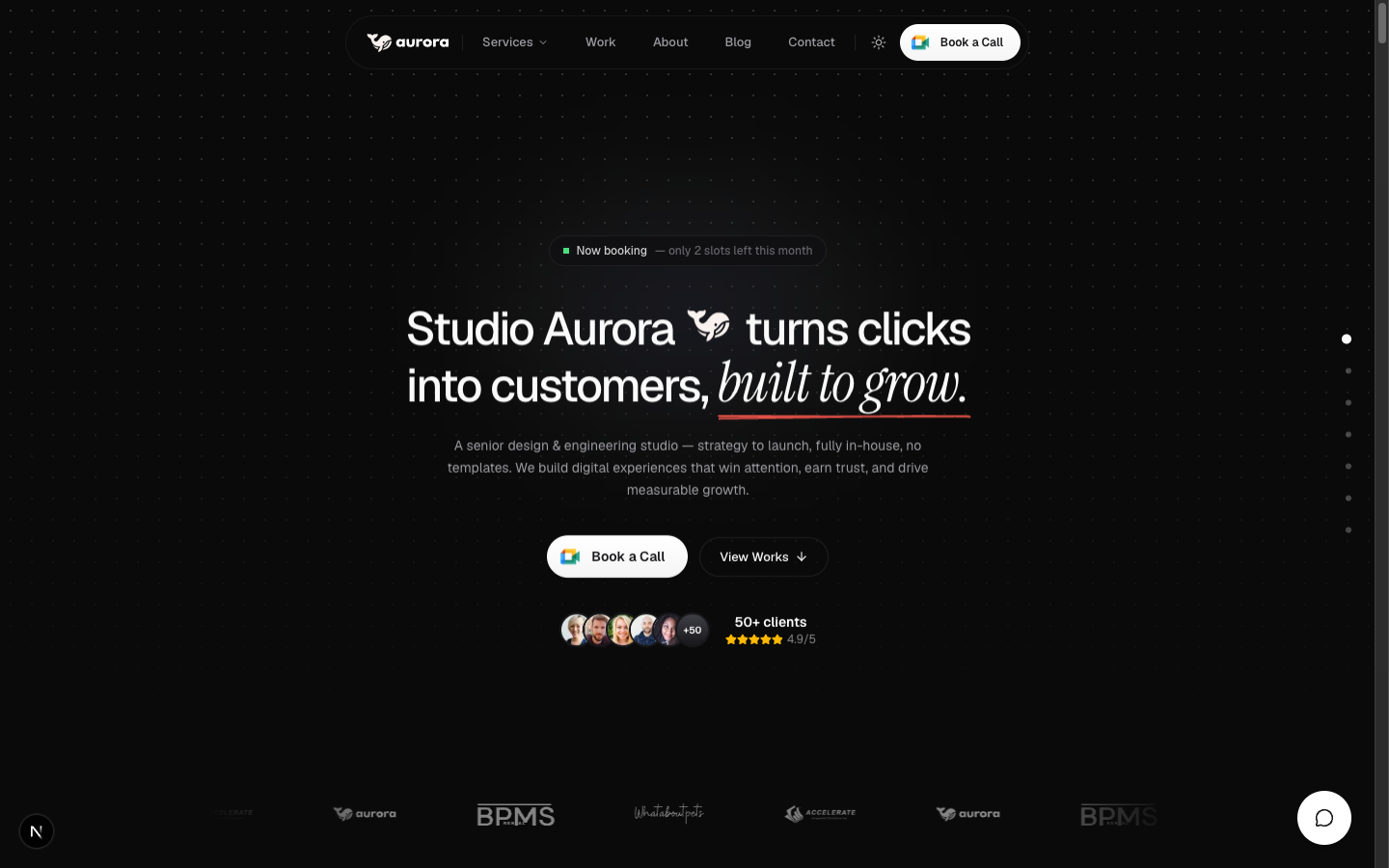
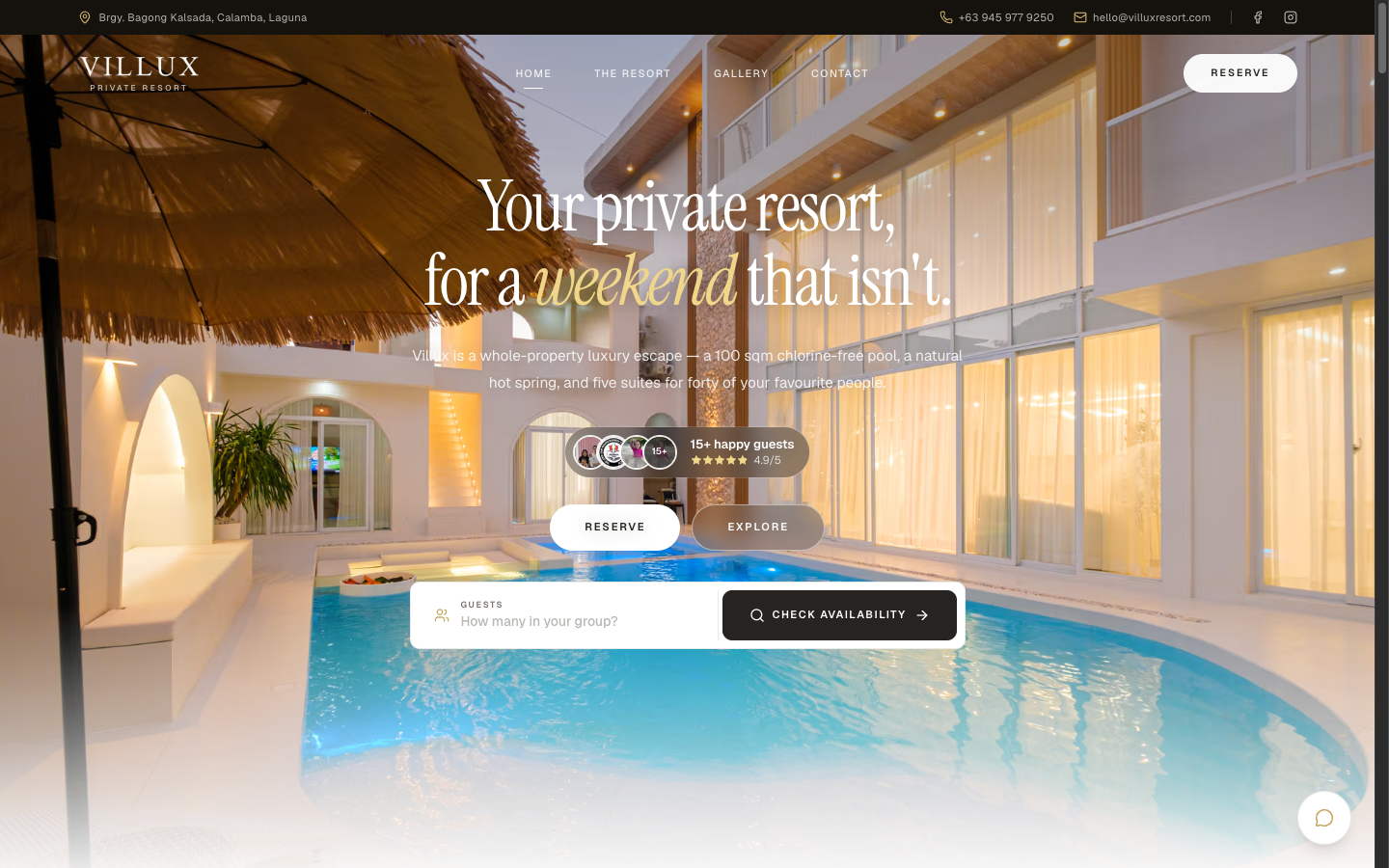
Selected work

Frequently asked questions
How much does web application development cost in the Philippines?
A custom web application in the Philippines typically costs around ₱250,000 to ₱2,500,000+ or about $4,500 to $45,000+ depending on scope, integrations, user roles, security requirements, and backend complexity. Small internal tools sit at the lower end, while SaaS-style platforms and advanced operations systems cost more.
What is the difference between a website and a web application?
A website mainly presents information, attracts visitors, and generates leads or sales. A web application lets users log in, manage data, complete workflows, view dashboards, submit records, or operate a business process through the browser.
How long does it take to build a custom web app?
A focused internal tool can take about 6 to 10 weeks, a mid-sized business web app can take around 10 to 20 weeks, and an advanced SaaS-style platform can take several months. Timeline depends on scope clarity, feature complexity, integrations, testing, and decision speed.
Can a web app replace our spreadsheets?
Yes, a web app can replace spreadsheets when the spreadsheet has become a business-critical system for bookings, inventory, status tracking, reporting, approvals, or customer records. The app can add permissions, validation, dashboards, audit history, and a more reliable workflow.
What stack does Studio Aurora use for web application development?
Studio Aurora typically uses Next.js, React, TypeScript, and database tools such as Postgres or Supabase. This stack supports interactive interfaces, structured data, authentication, admin dashboards, and maintainable application architecture.
Should we build a full platform or an MVP first?
Most businesses should start with a focused first version if the workflow, market, or user behavior still needs validation. A full platform makes more sense when the business already has clear requirements, budget, users, and a validated process that needs robust implementation.
Can a Philippine web app development team serve international clients?
Yes, a Philippine web app development team can serve international clients if the process, communication, documentation, hosting, and project management are handled professionally. Remote-first teams can work effectively across time zones when scope, milestones, and responsibilities are clear.
Do web apps need ongoing maintenance after launch?
Yes, most web apps need ongoing maintenance because browsers, dependencies, hosting environments, security requirements, user needs, and business workflows change over time. Maintenance may include bug fixes, monitoring, security updates, performance improvements, and new feature development.
Explore more
Web Design Philippines
Studio Aurora designs and builds high-converting websites for businesses across the Philippines. Modern, fast, and engineered to turn visitors into customers, not just look pretty.
Web Design Manila
Manila moves fast and the competition is fierce. Studio Aurora builds websites that help Metro Manila businesses stand out, load instantly, and convert the traffic they're already paying for.
Web Design Cebu
Cebu's businesses are growing fast, in tourism, retail, services, and tech. Studio Aurora builds modern, high-converting websites that help Cebu brands compete locally and reach customers nationwide.
Web Design Agency Philippines
Freelancers vanish. Templates age. Studio Aurora is a web design agency that delivers senior design and development, a real process, and a site you actually own, for businesses across the Philippines.

Let's build something that works.
Tell us about your project and we'll map out exactly how we'd approach it. No pressure, no jargon.