Philippines
Web design in the Philippines, built to win customers
Studio Aurora designs and builds high-converting websites for businesses across the Philippines. Modern, fast, and engineered to turn visitors into customers, not just look pretty.

Key takeaways
- Web design in the Philippines should account for mobile-first browsing, local search behavior, trust-building, and multiple contact channels such as forms, calls, Messenger, Viber, or WhatsApp.
- Many Philippine business websites underperform because they start with templates instead of strategy, load slowly, lack clear service pages, or fail to guide visitors toward inquiry.
- Custom Next.js or React websites cost more than templates but can offer stronger control over performance, UX, content structure, and long-term scalability.
- Typical Philippine website pricing ranges from about ₱30,000 to ₱250,000+ for many SME websites, with custom, ecommerce, and web application projects often reaching ₱300,000 to ₱1,500,000+.
- A remote Philippine web design studio can work effectively nationwide when the process includes clear discovery, structured feedback, defined ownership, and organized launch support.
The state of business websites in the Philippines
Web design in the Philippines is shifting from brochure-style pages to performance-focused websites that need to support search, ads, social traffic, and real customer decisions.
Web design Philippines is the planning, design, content structure, and technical development of websites for businesses serving Filipino customers, Philippine cities, or overseas markets from a Philippine base. A modern business website is no longer just an online calling card because customers now compare options, check legitimacy, read service pages, and expect fast mobile browsing before they inquire.
Many Philippine businesses still rely on Facebook pages, marketplace profiles, or old websites built years ago. Social platforms can create visibility, but they do not give a business full control over search traffic, page speed, lead tracking, conversion paths, or brand presentation. A website gives your business a central asset that can support Google search, paid campaigns, proposals, hiring, customer education, and sales conversations.
The Philippine market also has unique website behavior patterns. Many users browse on mobile data, compare prices quickly, and contact businesses through Messenger, Viber, WhatsApp, phone, or contact forms depending on the industry. A website for the Philippines needs to be fast, clear, mobile-first, and practical about how Filipino buyers actually make decisions.
Businesses in Metro Manila, Cebu, Davao, Iloilo, Bacolod, Cagayan de Oro, Pampanga, and provincial markets often need the same core thing: a credible site that explains the offer clearly and makes inquiry easy. Location still matters for local search, so companies targeting NCR may need a different page strategy from companies targeting Visayas, Mindanao, or nationwide leads. If your market is concentrated in the capital, our page on web design in Manila explains the local angle in more detail.
Why many Philippine business websites underperform
Most underperforming Philippine websites fail because they are built around appearance or convenience instead of customer intent, speed, content, and conversion.
A common problem is the template-first build. A business picks a visual layout, adds generic copy, uploads a few images, and publishes without deciding what the website must achieve. The result may look acceptable at first glance, but it often fails to answer the questions customers ask before they contact a supplier, clinic, school, contractor, software company, or service provider.
Slow performance is another major issue in the Philippines because many visitors use mobile connections or older devices. Heavy page builders, uncompressed images, excessive plugins, cheap hosting, and tracking scripts can make a website feel sluggish. A slow website makes every marketing channel less efficient because traffic from SEO, ads, referrals, and social media lands on pages that do not load or respond quickly enough.
Weak content also holds back many sites. Service pages often say what the company does but not who it is for, what problems it solves, how the process works, what makes the offer different, and what the visitor should do next. Google also needs clear content structure to understand the website, especially for competitive searches like web design philippines, construction services, dental clinics, real estate, B2B services, and ecommerce categories.
The most common issues are usually practical, not mysterious:
- Pages are designed before the offer and message are clarified.
- Mobile layouts are treated as a smaller desktop version.
- Calls to action are vague, hidden, or inconsistent.
- The website has no clear service, location, or industry page strategy.
- Tracking is missing, so the business cannot see what works.
A website that underperforms is not always a bad website visually. A website can look modern and still fail if it does not help the right visitor understand, trust, and contact the business.
What a high-converting website actually needs
A high-converting website needs clear positioning, fast performance, persuasive content, useful structure, and low-friction ways for customers to take action.
Conversion-focused web design is the practice of designing a website around a business goal, such as inquiries, bookings, calls, applications, purchases, or demo requests. The design should support the decision process instead of simply decorating the page. Every section should help a qualified visitor move from curiosity to confidence.
The first requirement is message clarity. A visitor should understand what you offer, who you serve, where you operate, and why you are a credible option within the first few seconds. In the Philippines, where many buyers compare providers through search results, Facebook pages, referrals, and directories, clarity can be more valuable than clever wording.
The second requirement is page structure. Homepages, service pages, location pages, about pages, and landing pages each serve different roles. A homepage should orient visitors, while a service page should answer specific buying questions. A location page should show local relevance without thin or duplicated content.
The third requirement is technical quality. A modern website should load quickly, work well on mobile, be accessible to common users, and follow basic SEO fundamentals. Technical quality includes clean code, image optimization, metadata, internal linking, schema where useful, analytics setup, and forms that actually deliver messages reliably.
A high-converting Philippine website usually includes:
- A clear headline that states the offer and audience.
- Service or product pages written for real customer questions.
- Proof elements such as process details, portfolio samples, credentials, or explainers.
- Strong mobile layouts for browsing on smaller screens.
- Contact options that match buyer habits, such as forms, calls, email, Messenger, Viber, or WhatsApp.
Search visibility is part of conversion because many customers never reach a website that Google cannot understand. If your current site is not appearing in search results, our guide on why your website does not show up on Google explains the common technical and content reasons.
Custom websites vs WordPress and template builders
Custom websites are best when strategy, performance, brand control, and long-term scalability matter, while WordPress and template builders can be suitable for simpler budgets and faster launches.
WordPress, Shopify themes, Wix, Squarespace, and other builders are not automatically bad. They can be useful for small brochure websites, early validation, event pages, or businesses that need to publish quickly with limited budget. The tradeoff is that template systems often encourage businesses to fit their message into a layout rather than designing around the customer journey.
Custom web development gives more control over speed, interface design, content modeling, integrations, and conversion flows. Studio Aurora builds custom modern websites on a Next.js and React stack when the project benefits from performance, flexible components, and a more tailored design system. A custom build is not necessary for every business, but it becomes more valuable when the website is expected to support serious acquisition, recruitment, ecommerce, or B2B sales.
| Option | Best for | Strengths | Tradeoffs |
|---|---|---|---|
| Template builder | Small starter sites, personal brands, simple brochures | Lower upfront cost, fast setup, easy visual editing | Limited differentiation, performance issues, less flexible structure |
| WordPress with a theme | Content sites, SMEs, blogs, basic service businesses | Familiar CMS, many plugins, broad developer support | Plugin bloat, maintenance needs, security and speed depend on setup |
| Custom Next.js or React website | Growth-focused businesses, B2B, service brands, custom landing pages | Strong performance control, tailored UX, flexible integrations | Higher planning and development cost, needs a skilled team |
| Ecommerce platform theme | Early online stores, catalog-led sellers | Faster product setup, payment and inventory tools | Checkout and UX may need deeper optimization later |
The right choice depends on your business stage, not on trend. A startup testing an offer may not need the same website investment as a national services company running paid campaigns. A school, clinic, developer, logistics provider, law firm, SaaS business, or real estate brand may need stronger content architecture and trust-building than a simple one-page template can provide.
If you are deciding between a custom build and a template approach, our deeper guide on custom web development vs template builders explains the practical tradeoffs.
Want this done right, without the guesswork?
Book a free call and we'll map out exactly how we'd approach your project.
Our design-and-build approach for Philippine businesses
Studio Aurora’s approach is to plan the website around business goals first, then design and build a fast, modern experience that supports conversion.
A good website project starts with diagnosis rather than decoration. The first step is understanding the audience, offer, competitors, search opportunities, sales process, and objections that stop visitors from inquiring. A design that ignores these inputs may look polished but still fail to help the business win better leads.
The strategy phase defines the page map, conversion goals, content priorities, and technical direction. The design phase turns those decisions into wireframes and interface layouts that make information easy to scan. The development phase builds the approved design into a responsive website with attention to speed, SEO basics, analytics, and maintainability.
A typical design-and-build flow looks like this:
| Phase | What happens | Typical output |
|---|---|---|
| Discovery | Goals, audience, offer, competitors, current site review | Project brief and direction |
| Structure | Sitemap, page priorities, conversion paths | Page plan and content requirements |
| Design | Wireframes, visual design, responsive layouts | Approved page designs |
| Development | Front-end build, CMS or content setup, integrations | Working website on staging |
| Launch | QA, performance checks, redirects, analytics, deployment | Live website ready for marketing |
Remote collaboration works well when the project has clear milestones and decision points. Most discussions can happen through video calls, shared documents, recorded walkthroughs, and organized feedback rounds. The goal is to keep the process clear enough for busy owners, marketing teams, and founders without forcing unnecessary meetings.
If you are comparing providers, our page on choosing a web design agency in the Philippines explains what to look for in process, scope, ownership, and communication. You can also book a free consultation if you want to talk through whether your website needs a redesign, a rebuild, or a more focused landing page.
Industries and business types we serve nationwide
Studio Aurora works with Philippine and international businesses that need websites to support trust, search visibility, lead generation, online sales, or clearer brand presentation.
The needs of a Philippine business website vary by industry. A professional services firm may need detailed service pages and credibility signals. A property-related company may need location-driven content and inquiry flows. A clinic may need clear service explanations, mobile contact options, and trust-building information. An ecommerce business may need product discovery, checkout clarity, and retention paths.
Service businesses often benefit from pages that explain the problem, the process, the price factors, and the next step. B2B companies often need stronger proof, technical explanations, comparison content, and sales enablement pages. Consumer brands often need visual clarity, fast mobile browsing, and easy paths from social traffic to product or booking pages.
Studio Aurora is remote-first, so geography does not limit collaboration. A business in Cebu can work with the same planning and delivery process as a business in Metro Manila, Davao, or outside the Philippines. If your company is based in the Visayas, our page on web design in Cebu covers local considerations for Cebu-based organizations.
Website priorities often differ by business type:
- Local service providers need local SEO, service clarity, and fast inquiry options.
- B2B companies need credibility, explainers, lead capture, and content depth.
- Ecommerce brands need product structure, checkout usability, and trust signals.
- Schools, clinics, and professional firms need clear information architecture.
- Startups need flexible pages that can evolve as the offer changes.
A website should match the way the business sells. A company with a long sales cycle needs different content from a company selling low-consideration products online. A strong website reflects the real buying journey rather than forcing every visitor into the same generic contact form.
How website cost works in the Philippines
A business website in the Philippines typically costs around ₱30,000 to ₱250,000+ for common SME projects, while larger custom, ecommerce, or web application builds can range from ₱300,000 to ₱1,500,000+ depending on scope.
Website cost in the Philippines depends on strategy, number of pages, design depth, content work, CMS requirements, integrations, ecommerce features, animation, SEO setup, hosting, and the experience level of the provider. A simple template site can be affordable, but a conversion-focused custom build requires more planning, design, development, testing, and launch work.
The following are general Philippine market ranges, not exact quotes from Studio Aurora or guaranteed prices. USD equivalents are approximate and can shift with exchange rates.
| Website type | Typical PH market range | Approx. USD | What is usually included |
|---|---|---|---|
| Basic one-page or landing page | ₱15,000 to ₱60,000 | $260 to $1,050 | Simple layout, basic copy placement, contact section |
| Small business brochure website | ₱30,000 to ₱120,000 | $520 to $2,100 | 4 to 8 pages, responsive design, basic SEO setup |
| Custom conversion-focused website | ₱120,000 to ₱450,000 | $2,100 to $7,850 | Strategy, custom UI, multiple page templates, performance focus |
| Ecommerce website | ₱150,000 to ₱800,000+ | $2,600 to $14,000+ | Product catalog, cart, checkout, payment setup, shipping rules |
| Custom web app or advanced platform | ₱500,000 to ₱1,500,000+ | $8,700 to $26,000+ | Custom workflows, dashboards, integrations, complex development |
| Ongoing support and maintenance | ₱5,000 to ₱50,000+ per month | $90 to $870+ | Updates, monitoring, content changes, optimization support |
Developer and agency rates also vary widely. Freelance web designers in the Philippines may charge lower project fees or hourly rates, while experienced developers, specialist designers, and agencies usually price higher because they include planning, project management, QA, technical decisions, and accountability. A cheaper website can become expensive if it needs to be rebuilt, cleaned up, migrated, or fixed after launch.
The biggest cost drivers are usually scope and decision complexity. Ten carefully planned pages can cost more than twenty generic pages if they require custom layouts, original copy, technical SEO, integrations, and conversion testing. Ecommerce projects cost more when they involve many product types, payment rules, shipping logic, inventory workflows, or checkout optimization.
If budget is a major concern, it is often better to launch a focused first version than to build a large but weak website. A strong homepage, key service pages, contact path, analytics, and search-ready structure can create a foundation for future pages. For a deeper pricing breakdown, see our guide to website design cost in the Philippines and our long-form article on custom website cost in 2026.
What it is like working with a remote Philippine web design studio
Working with a remote Philippine web design studio should feel structured, transparent, and easy to follow, even when the client and team are in different cities or time zones.
A remote-first studio can serve clients across the Philippines without requiring in-person meetings for every decision. Video calls are useful for strategy and reviews, while written briefs, shared boards, and recorded walkthroughs create a clearer reference than scattered chat messages. Remote work is effective when responsibilities, timelines, files, approvals, and feedback channels are defined early.
For Philippine businesses, remote collaboration can be especially practical because decision-makers may be spread across NCR, provinces, and overseas offices. A founder in Makati, a marketing manager in Cebu, and an operations head in Singapore can review the same design link and provide consolidated feedback. The website project becomes easier when the process reduces travel, meeting delays, and unclear revisions.
A reliable remote process should include clear ownership of content, assets, domain access, hosting decisions, analytics, and launch approvals. The client should know what to provide and when. The studio should explain what is being designed, what is being built, and what tradeoffs are involved.
Before hiring any provider, ask practical questions about process and ownership. Who owns the final website files and accounts? What happens after launch? How are revisions handled? How are delays managed when content is late? Our guide on how to choose a web design agency covers warning signs that can help you avoid a poor fit.
Some businesses need a full studio, while others only need an individual developer for a narrow task. If you are comparing those options, our page on how to hire a web developer in the Philippines explains when a freelancer, developer, or agency makes the most sense.
How to get started with web design in the Philippines
The best way to start a website project is to define the business goal, priority pages, target customers, budget range, and launch timing before choosing a design direction.
A clear brief does not need to be complicated. It should state what the website must achieve, who it must persuade, what content already exists, what systems it must connect to, and what deadline matters. A good brief helps the studio recommend the right scope instead of guessing.
Before your first consultation, prepare the essentials:
- Your current website URL, if one exists.
- The main products, services, or offers the site must promote.
- The customer locations or markets you want to target.
- Examples of websites you like and dislike, with reasons.
- Your approximate budget range and ideal launch date.
A first conversation should clarify whether you need a redesign, a new custom build, a landing page, ecommerce planning, SEO cleanup, or technical development support. The right recommendation may be smaller than a full rebuild if the current website has a solid foundation. The right recommendation may also be a larger rebuild if the current site blocks search visibility, speed, editing, or conversion.
Studio Aurora designs and builds modern websites for Philippine businesses and international clients that want a clearer, faster, more conversion-focused web presence. If you are planning a new website or questioning whether your current site is holding back leads, tell us about your project and we can help you identify the most practical next step.
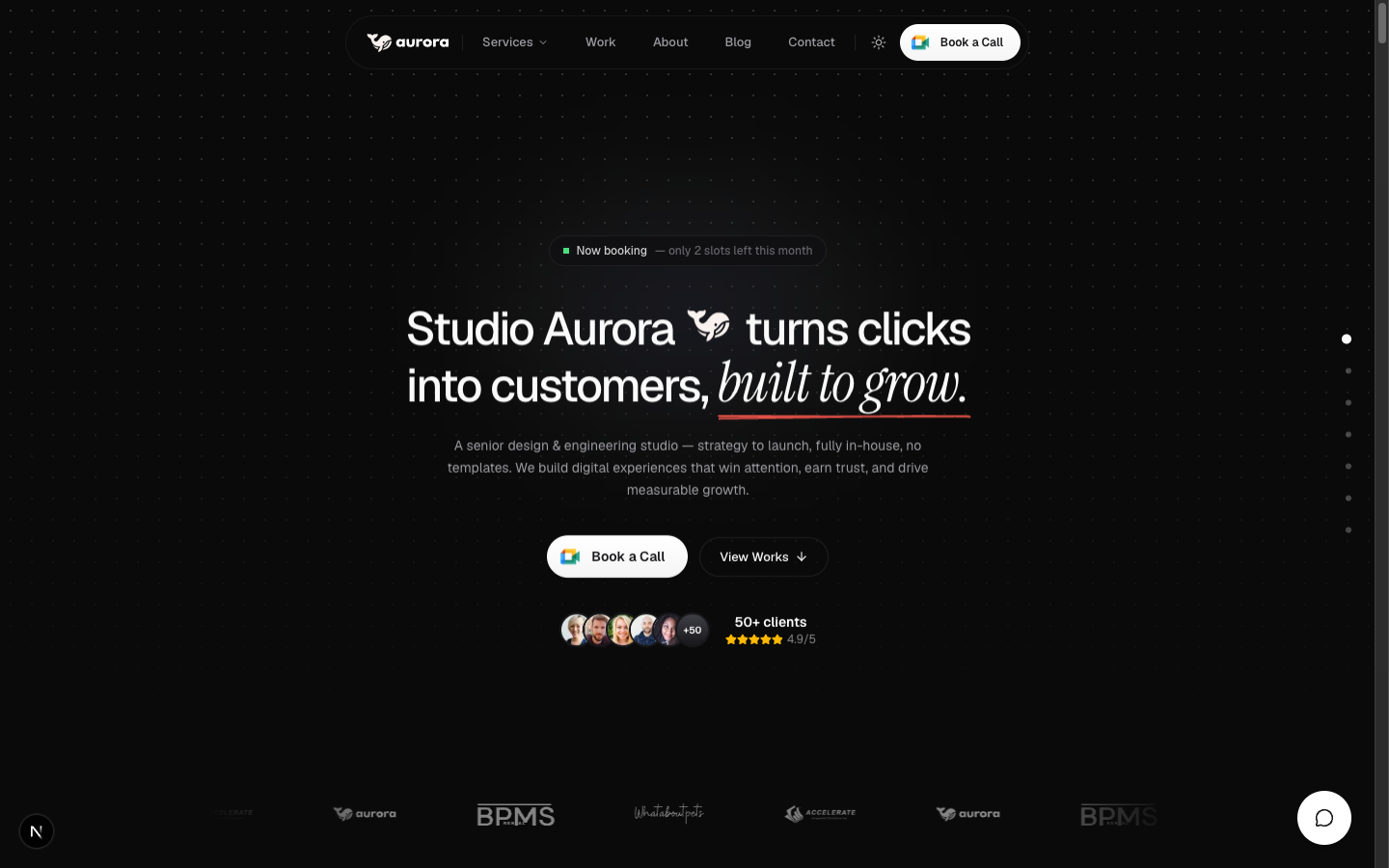
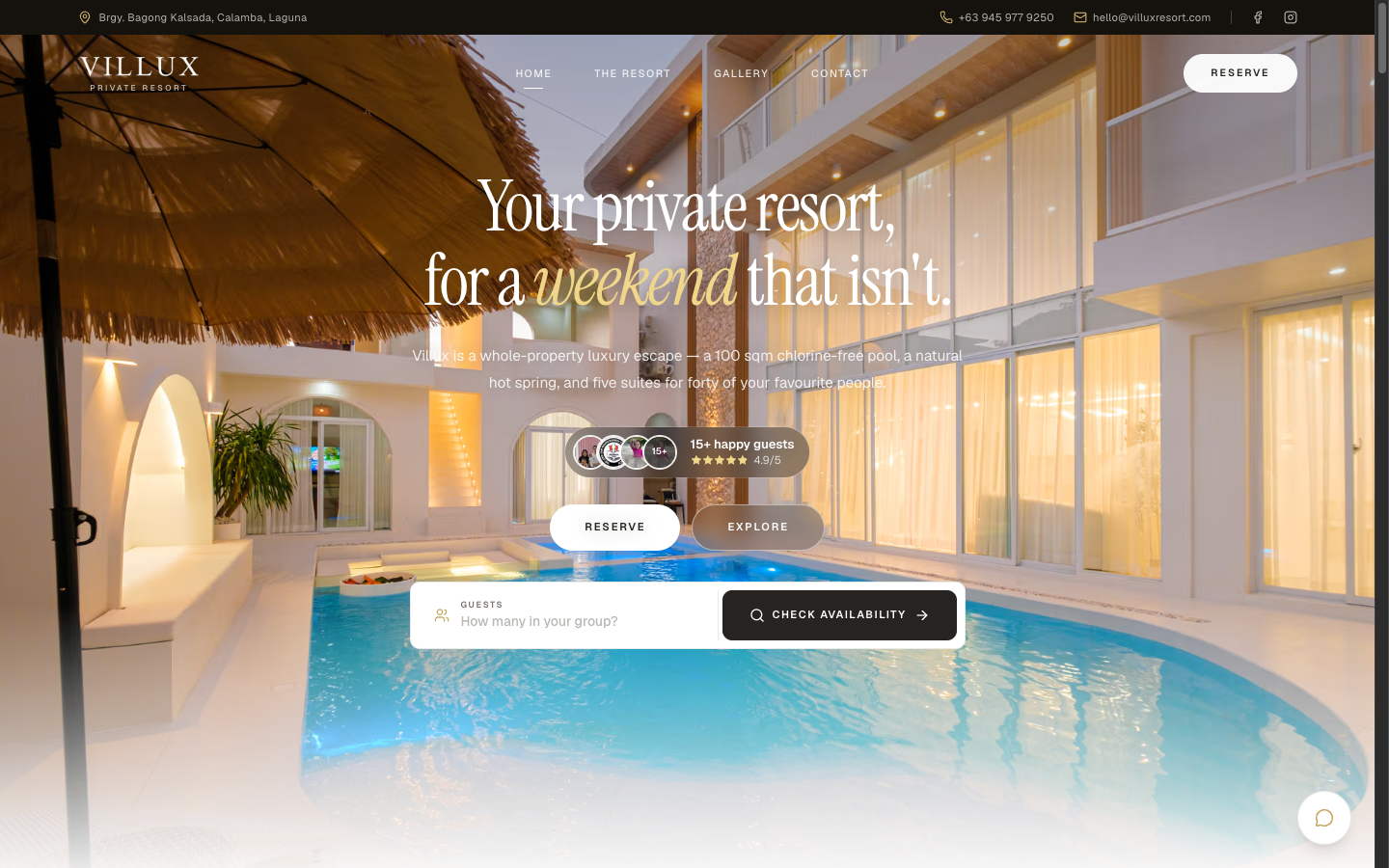
Selected work

Frequently asked questions
How much does web design cost in the Philippines?
Typical business website projects in the Philippines range from around ₱30,000 to ₱250,000+, while custom conversion-focused sites, ecommerce builds, and web applications can range from ₱300,000 to ₱1,500,000+ depending on scope, design depth, integrations, and content needs.
Is a custom website better than a WordPress template?
A custom website is usually better when performance, brand control, conversion strategy, and scalability matter. A WordPress template can still be suitable for a simple starter site, a small brochure website, or a business with a limited initial budget.
How long does it take to build a business website?
A simple website may take 2 to 4 weeks if content and decisions are ready. A custom business website commonly takes 6 to 12 weeks, while ecommerce or complex projects can take several months depending on product data, integrations, approvals, and testing.
Do Philippine businesses still need a website if they already have a Facebook page?
Yes, most serious businesses still benefit from a website because it provides ownership, search visibility, structured service information, analytics, landing pages, and credibility that a social media page cannot fully replace.
What should a high-converting website include?
A high-converting website should include clear positioning, fast mobile performance, useful service or product pages, proof elements, SEO-friendly structure, analytics, and low-friction contact or purchase paths.
Can a remote web design studio serve clients outside Metro Manila?
Yes, a remote-first web design studio can serve clients across the Philippines and abroad through video calls, shared documents, structured feedback, staging links, and organized launch processes.
What platform does Studio Aurora use for websites?
Studio Aurora builds custom modern websites primarily on a Next.js and React stack when the project needs speed, flexibility, strong front-end control, and a tailored user experience.
What should I prepare before contacting a web design studio?
Prepare your current website URL if you have one, your main services or products, target markets, business goals, preferred launch timing, example websites, and an approximate budget range.
Explore more
Web Design Manila
Manila moves fast and the competition is fierce. Studio Aurora builds websites that help Metro Manila businesses stand out, load instantly, and convert the traffic they're already paying for.
Web Design Cebu
Cebu's businesses are growing fast, in tourism, retail, services, and tech. Studio Aurora builds modern, high-converting websites that help Cebu brands compete locally and reach customers nationwide.
Web Design Agency Philippines
Freelancers vanish. Templates age. Studio Aurora is a web design agency that delivers senior design and development, a real process, and a site you actually own, for businesses across the Philippines.
Web Design Cost Philippines
No vague “it depends.” Here's a straight breakdown of what a professional website costs in the Philippines, what drives the price, and where cheap sites quietly cost you more.

Let's build something that works.
Tell us about your project and we'll map out exactly how we'd approach it. No pressure, no jargon.