Philippines
Vacation rental and staycation websites in the Philippines
Your own website for your staycation or vacation rental, so you can take direct bookings and stop losing margin to platform fees.

Key takeaways
- A professional vacation rental website in the Philippines typically starts around ₱60,000 to ₱180,000 for an inquiry-focused site and ₱180,000 to ₱500,000+ for direct-booking functionality.
- Your own website should not necessarily replace Airbnb, Agoda, Booking.com, or Facebook, but it gives you a branded home base for trust, direct inquiries, and repeat guests.
- The most important staycation website content includes real photos, rates, availability or inquiry flow, amenities, rules, location details, reviews, and payment instructions.
- GCash, Maya, bank transfer, payment links, and card payments can all work, but the right setup depends on how manual or automated your booking process should be.
- A custom rental website is most valuable when the property has strong booking value, repeat-guest potential, multiple units, or a need for clearer direct-booking operations.
What is a vacation rental website in the Philippines?
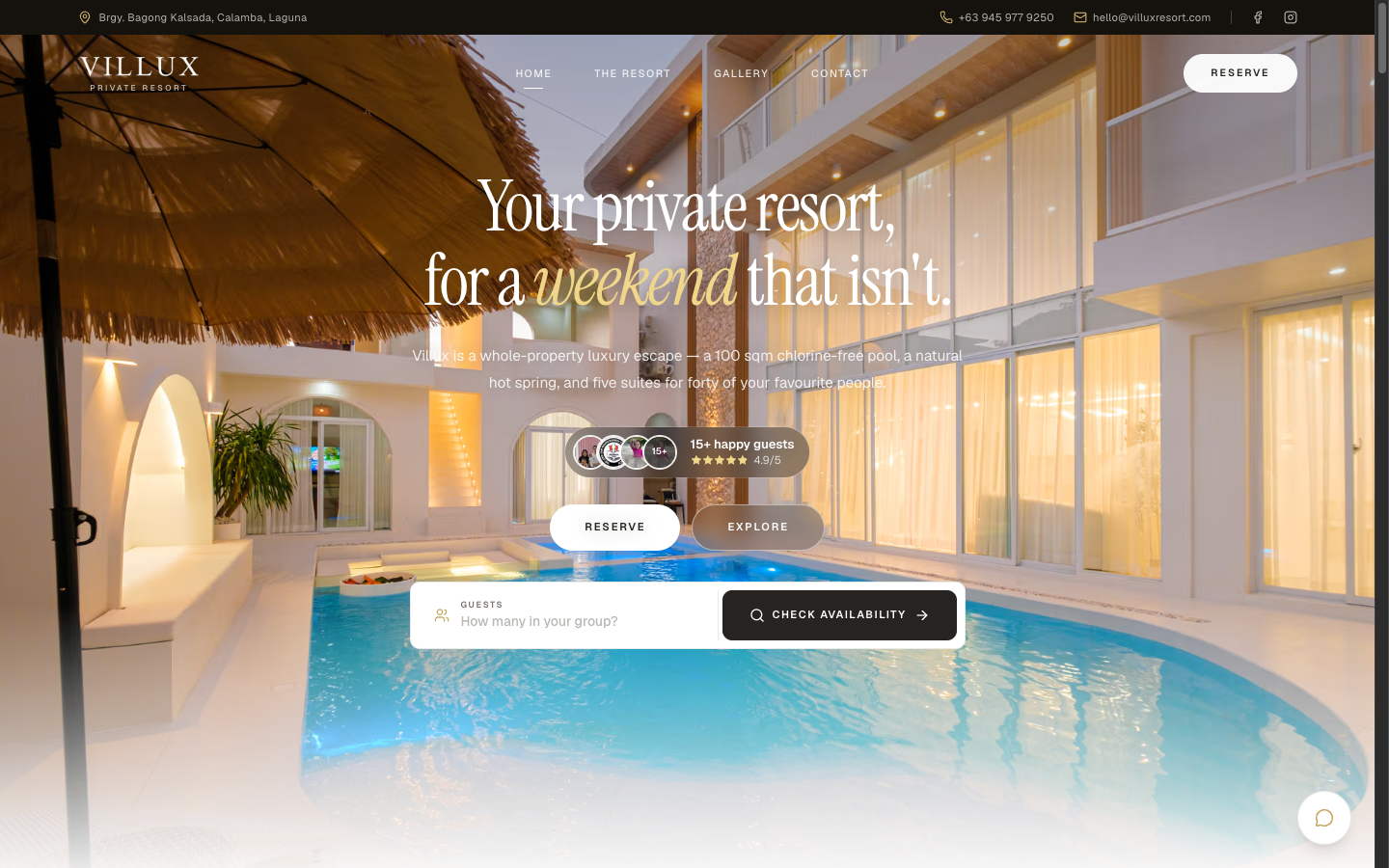
A vacation rental website in the Philippines is a dedicated website for a staycation unit, private villa, rest house, beach house, condo, cabin, or short-term rental that lets guests view the property, check rates, send inquiries, and book directly.
For most Philippine staycation owners, the practical starting cost for a professional rental website is usually around ₱60,000 to ₱180,000 for a strong brochure and inquiry site, and ₱180,000 to ₱500,000+ for a direct-booking website with calendars, payment flows, and more custom functionality. These are general market ranges, not exact quotes, because scope changes quickly based on the number of properties, booking logic, payment setup, and content needs.
A vacation rental site is different from a generic business website because guests make decisions visually and logistically. They need to see real photos, understand sleeping capacity, compare weekday and weekend rates, check rules, verify location, and know how to reserve without back-and-forth confusion.
In the Philippines, many guests discover stays on Airbnb, Facebook, TikTok, Instagram, Agoda, Booking.com, or Google Search. A dedicated website gives your property a permanent home where you control the presentation, booking process, and guest relationship instead of relying only on rented platform space.
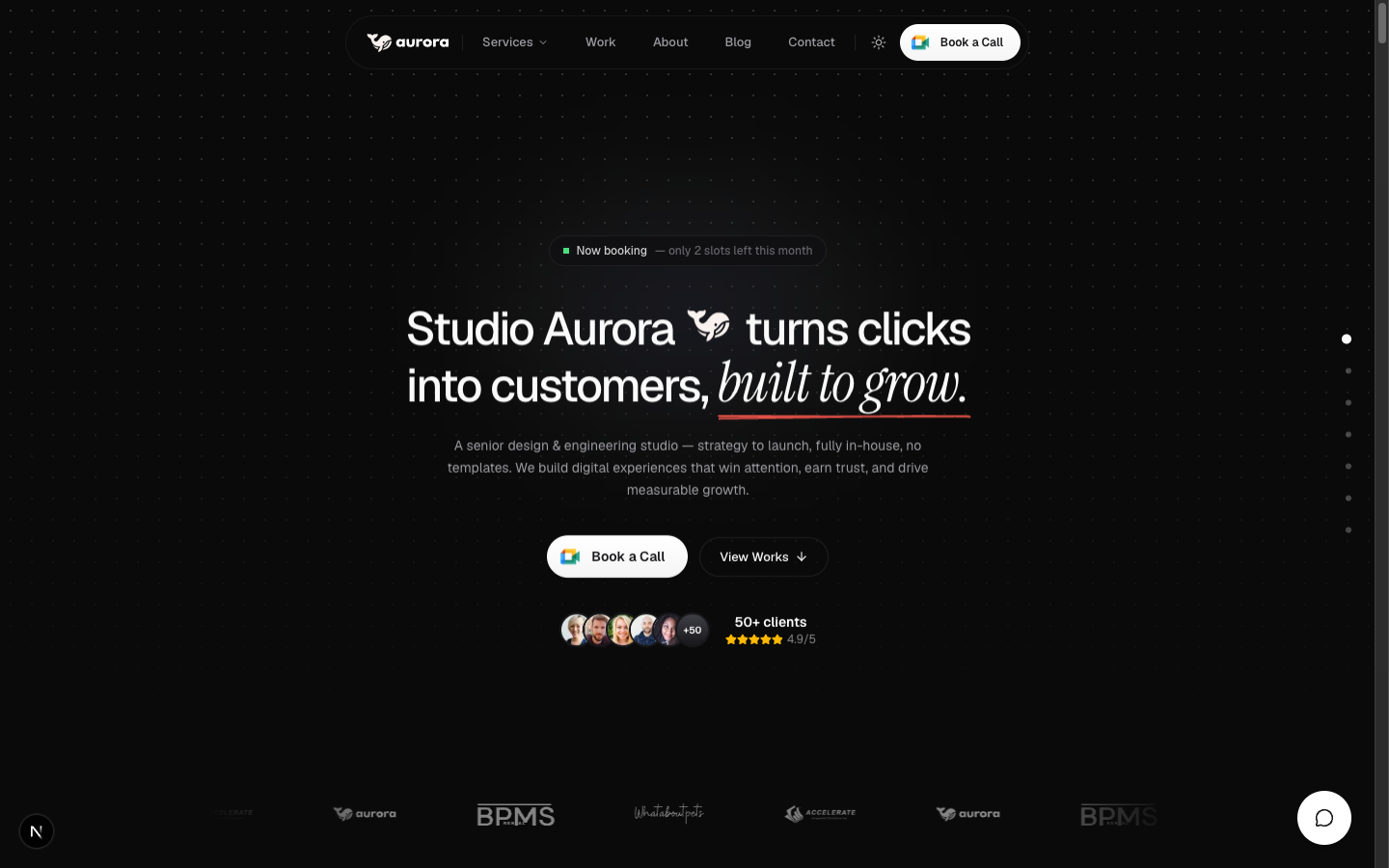
Studio Aurora builds custom rental and staycation websites on a modern Next.js and React stack for owners who want a faster, cleaner, conversion-focused alternative to template pages. If your property is also listed on Airbnb, our page on websites for Airbnb hosts in the Philippines explains how a direct site can support, not replace, your existing listing strategy.
Why should staycation owners have their own website instead of relying only on Airbnb or Facebook?
Staycation owners benefit from their own website because it gives them more control over guest trust, direct inquiries, pricing presentation, and long-term visibility than a platform-only approach.
Airbnb, Booking.com, Agoda, and Facebook are useful demand channels, but each one has limits. Platform profiles are constrained by their layout, policies, fees, ranking rules, and guest communication systems. Facebook pages and Messenger threads can work for small operations, but they often become messy when guests ask for rates, availability, exact location, photos, payment terms, and house rules in separate conversations.
A dedicated website gives your rental a single source of truth. Guests can read the same rates, inclusions, check-in rules, cancellation terms, parking notes, and payment steps before they message you. This reduces repetitive questions and makes the property feel more organized, especially for groups booking birthdays, family trips, barkada outings, company stays, prenups, or weekend getaways.
A website also helps you build brand recall outside marketplace search results. A guest who remembers your villa name, beach house name, or staycation brand can search for you directly and land on your own property page. That search behavior is hard to capture if your only web presence is a social media profile or a listing buried among competing rentals.
The strongest approach is usually not website versus platforms. The stronger approach is website plus platforms, with your own site acting as the home base for brand, trust, direct bookings, repeat guests, and campaigns.
What should a vacation rental or staycation website include?
A good vacation rental website should include the information guests need to decide quickly: photos, sleeping capacity, rates, availability or inquiry flow, amenities, rules, location, reviews, and payment instructions.
Guests booking Philippine staycations often compare several properties in one session. They may be checking a Tagaytay condo, a Batangas beach house, a Laguna private resort, a Baguio transient, a Siargao villa, and a Metro Manila staycation unit at the same time. If your website makes important information hard to find, guests may simply message another host.
The most useful rental websites answer practical questions before the guest has to ask. They explain how many people can stay, whether extra guests are allowed, what time check-in starts, whether pets are accepted, if videoke is permitted, whether there is parking, and what the payment schedule looks like.
A strong staycation website usually needs these core pages or sections:
- Property gallery with real photos, room photos, bathroom photos, exterior shots, and common areas
- Rates and inclusions for weekdays, weekends, holidays, peak dates, and extra guests
- Availability or inquiry form that helps guests submit dates, group size, and contact details
- Amenities, sleeping arrangements, house rules, cancellation terms, and check-in instructions
- Location guidance with nearby landmarks, travel notes, parking information, and map context
- Reviews, FAQs, contact options, and payment instructions for GCash, Maya, bank transfer, or card payment
A website can also include multiple property pages if you manage several units or villas. A one-unit condo staycation needs a simpler structure than a collection of private resorts, but both need clear conversion paths.
For larger hospitality properties, the structure often becomes closer to a resort website. If you operate pools, event spaces, cottages, function rooms, or overnight packages, our guide to resort website design in the Philippines may be a closer fit.
How do direct bookings reduce platform dependence and improve guest relationships?
Direct bookings help rental owners reduce dependence on third-party platforms by letting guests inquire, reserve, and communicate through channels the owner controls.
Platform fees and commission structures vary by platform, property type, and guest arrangement. A direct website does not remove every operating cost, but it can reduce the need to send every returning guest through a marketplace where fees, ranking pressure, and competing listings are always present.
A direct-booking website is a website that allows guests to book or request a reservation directly with the property owner, rather than completing the entire transaction through an online travel agency or rental marketplace. Direct booking can be fully automated with calendar and payment logic, or it can be semi-manual where guests submit dates and the owner confirms availability before collecting payment.
For many Philippine staycation operators, semi-manual direct booking is a practical first step. The guest submits dates, group size, and contact details. The owner verifies the calendar, sends the payment instructions, and confirms the booking after the deposit. This setup is easier to manage when rates change frequently for long weekends, holidays, and special events.
A more advanced direct booking flow can show date availability, apply rate rules, collect deposits, and send confirmation emails. The right level depends on how many bookings you handle, how complex your pricing is, and how much manual confirmation you still want.
The value is not only fee reduction. A direct booking gives you a guest relationship that can lead to repeat stays, referral messages, email updates, and private offers. A guest who books directly can remember your brand, not only the marketplace where they first found you.
If direct reservations are a major goal, read our dedicated page on direct booking websites in the Philippines. For a deeper comparison of platform strategy, our guide to direct booking vs Booking.com and Agoda explains the tradeoffs in more detail.
After you have a clear idea of the booking flow you want, you can book a free consultation and we can help map whether your rental needs an inquiry-first site, a booking-engine-style site, or a phased approach.
What payment options matter for Philippine vacation rental websites?
Philippine vacation rental websites should support familiar local payment options such as GCash, Maya, bank transfer, and, where appropriate, card or online payment links.
Guest trust improves when payment instructions are clear, consistent, and visible before the guest commits. Many Filipino guests are comfortable paying deposits through GCash or bank transfer, but they still want reassurance that they are sending money to the correct account and that their booking will be recorded properly.
A website can present payment terms in a structured way. It can explain whether a deposit is required, whether the balance is paid before check-in or upon arrival, whether security deposits apply, and how refunds or reschedules are handled. Clear payment language is especially important for high-value bookings such as private villas, beach houses, and whole-property stays.
Payment setup usually falls into three levels:
| Payment approach | Best for | Notes |
|---|---|---|
| Manual payment instructions | Small staycations and owner-managed rentals | Guests submit an inquiry, then pay via GCash, Maya, or bank transfer after confirmation |
| Payment links or invoices | Rentals that want cleaner deposit collection | The owner sends a payment link after confirming dates and pricing |
| Integrated online checkout | Higher-volume rentals or multi-property businesses | The website calculates pricing and collects payment or deposit through a connected provider |
The simplest setup is often the most realistic for a single-unit staycation. A custom inquiry form can collect the guest name, dates, number of guests, and preferred payment method, then the owner confirms details before requesting a deposit.
A more automated setup needs extra planning because vacation rental pricing is rarely flat. Holiday pricing, cleaning fees, extra-person fees, long-stay discounts, security deposits, and damage policies all affect the booking flow. The website should match the real business process instead of forcing you into a generic checkout that creates mistakes.
Security and clarity also matter. A professional website should avoid asking guests to send sensitive payment data through unsafe forms. It should use secure hosting, proper form handling, and clear confirmation messages so guests understand what happens after they submit details.
Want this done right, without the guesswork?
Book a free call and we'll map out exactly how we'd approach your project.
How much does a vacation rental website cost in the Philippines?
A vacation rental website in the Philippines typically costs around ₱60,000 to ₱180,000 for a professional inquiry-focused site, ₱180,000 to ₱500,000+ for a direct-booking website, and ₱500,000+ for complex multi-property or custom booking systems.
These ranges are typical market estimates in the Philippines and should not be treated as fixed quotes. The final cost depends on design quality, number of pages, property count, booking complexity, payment integration, content work, SEO needs, and whether the website is custom-built or template-based.
| Website type | Typical Philippine market range | Approx. USD equivalent | What is usually included |
|---|---|---|---|
| Simple landing page for one unit | ₱35,000 to ₱80,000 | $600 to $1,400 | One-page presentation, gallery, contact buttons, basic inquiry form |
| Professional staycation inquiry site | ₱60,000 to ₱180,000 | $1,000 to $3,100 | Custom design, property sections, rates, FAQs, forms, SEO basics, mobile optimization |
| Direct-booking rental website | ₱180,000 to ₱500,000+ | $3,100 to $8,600+ | Availability logic, booking forms, payment flow planning, confirmation emails, admin considerations |
| Multi-property rental or villa portfolio | ₱300,000 to ₱900,000+ | $5,200 to $15,500+ | Multiple property pages, filtering, custom CMS, booking rules, more content and testing |
| Ongoing care, hosting, and improvements | ₱5,000 to ₱30,000+ per month | $85 to $520+ per month | Maintenance, updates, analytics review, support, small improvements |
A cheaper template site may be enough if your only goal is to show photos and a phone number. A custom site becomes more valuable when you need strong mobile performance, clearer conversion paths, better SEO foundations, custom booking logic, or a brand experience that does not look like every other template.
Owners should also budget for photography, copywriting, domain registration, hosting, maintenance, and occasional updates. In vacation rentals, better photos often improve the website more than an extra design effect because guests book based on confidence and visual clarity.
For a broader view of local pricing, see our Philippine web design cost guide and our detailed article on custom website cost in 2026. If you are comparing DIY builders, freelancers, and agencies, our article on custom web development versus template builders explains the tradeoffs.
If you want a realistic estimate for a specific rental, villa, or staycation brand, you can tell us about your project and we will help identify the simplest build that can support your booking goals.
How should your own website work alongside Airbnb, Agoda, Booking.com, and Facebook?
Your own website should work alongside listing platforms by giving guests a branded destination for trust-building, direct inquiries, repeat bookings, and search visibility.
A website does not need to replace Airbnb or online travel agencies on day one. Many rental owners use marketplaces for discovery and their website for credibility. A guest may first see your property on Airbnb, then search the property name on Google, check your website, message you directly, or save the site for a future booking.
The main strategic difference is control. Marketplaces control how your property is displayed, what competing listings appear nearby, and how guests communicate. Your website controls the story, photos, policies, direct contact options, and long-term brand presence.
| Channel | Strength | Limitation | Best use |
|---|---|---|---|
| Airbnb or similar platforms | Built-in audience and booking trust | Fees, competition, limited branding, platform rules | Discovery and first-time guest acquisition |
| Facebook and Instagram | Easy messaging and local social proof | Hard to organize rates, rules, dates, and old posts | Promotions, inquiries, community visibility |
| Own website | Brand control, SEO, direct inquiry flow, repeat guests | Needs setup, content, maintenance, and promotion | Home base for direct bookings and guest confidence |
| Google Business Profile | Local search and map visibility | Limited space and less booking control | Supporting local discovery and reviews |
A practical setup is to keep marketplace listings active while improving your direct website over time. The listing platforms can bring first-time attention. Your website can help convert searchers, answer common questions, capture repeat guests, and support campaigns from Facebook ads, influencer posts, QR codes, and Google Search.
Search visibility matters because guests often search by location and stay type, such as private resort in Laguna, Tagaytay staycation with pool, beach house Batangas, or condo staycation near MOA. A website gives you more room to create useful pages around these searches than a single social profile can provide. Our guide on why websites do not show up on Google explains the SEO basics that affect visibility.
What is the build process for a custom staycation website?
The build process for a custom staycation website should start with booking goals, then move through content planning, design, development, testing, launch, and improvement.
A rental website works best when the business rules are clear before design begins. The team needs to understand how you handle inquiries, deposits, date blocking, cancellations, extra guests, cleaning fees, security deposits, early check-in, late checkout, and peak season pricing. A beautiful website can still fail if it cannot explain the booking process clearly.
Studio Aurora typically approaches a vacation rental website as a conversion and operations project, not just a design project. The goal is to help guests move from interest to inquiry or booking with fewer doubts, while giving the owner a site that is practical to update.
A typical process looks like this:
- Discovery and booking-flow mapping, including property type, guest profile, rates, payment steps, and platform usage
- Content planning for photos, copy, FAQs, rules, location notes, amenities, and guest objections
- Custom design for mobile-first browsing, visual hierarchy, calls to action, and trust signals
- Development on a modern Next.js and React stack, with forms, CMS options, analytics, and technical SEO basics
- Testing, launch, training, and post-launch improvements based on real guest behavior
The timeline depends on scope. A polished inquiry-first website for one property may take several weeks once content is ready. A multi-property site with booking logic, payment workflows, and custom admin features usually needs more planning, testing, and iteration.
Owners can speed up the project by preparing high-quality photos, accurate rates, final house rules, payment instructions, a list of amenities, and common guest questions. The best websites usually come from clear business details, not vague copy.
If you are still choosing who to hire, our guide on finding the right website developer in the Philippines can help you compare options. If you prefer an agency partner, our broader web design Philippines page explains how we think about custom business websites.
Is a custom vacation rental website worth it for your property?
A custom vacation rental website is worth considering when your property has enough booking value, repeat-guest potential, or brand ambition to justify owning a stronger direct channel.
A single low-priced unit with occasional bookings may not need an advanced booking system immediately. A simple, well-made inquiry site may be enough to look professional, organize information, and support direct messages from Facebook, Instagram, Google, and referrals.
A higher-value rental, private villa, beach house, or multi-unit staycation business usually has more to gain from a custom site. When one booking can be worth several thousand to tens of thousands of pesos, a clearer website can help reduce guest hesitation, improve inquiry quality, and support direct repeat bookings over time.
The right website should match the stage of the business. Some owners should start with a fast, clean direct-inquiry site and add booking automation later. Other owners already need calendar logic, payment flows, multiple property pages, and a more structured content system from the start.
A good website cannot fix poor photos, unclear rules, slow replies, or weak guest experience. A good website can make a strong property easier to trust, easier to understand, and easier to book directly.
If you want to build a dedicated website for your staycation, villa, rest house, or vacation rental in the Philippines, the next step is to book a free consultation so we can review your property, booking flow, content needs, and realistic website scope.
Selected work

Frequently asked questions
How much does a vacation rental website cost in the Philippines?
Typical Philippine market ranges are about ₱60,000 to ₱180,000 for a professional inquiry-focused rental website, ₱180,000 to ₱500,000+ for a direct-booking website, and ₱500,000+ for complex multi-property systems. The final cost depends on booking logic, design quality, content, integrations, and the number of properties.
Do I still need Airbnb if I have my own staycation website?
Many owners still use Airbnb and similar platforms for discovery while using their own website for trust-building, direct inquiries, repeat guests, and brand control. A website and platform listings can work together instead of competing with each other.
Can a vacation rental website accept GCash or Maya payments?
Yes, a rental website can explain GCash, Maya, bank transfer, or payment-link instructions clearly. Depending on the setup, payment can be manual after owner confirmation or more automated through an integrated checkout or payment provider.
Should my staycation website have instant booking?
Instant booking is useful for higher-volume rentals with clear availability and stable pricing, but it is not always necessary. Many Philippine staycation owners prefer an inquiry-first flow because holidays, extra guests, deposits, and house rules often need manual confirmation.
What pages does a vacation rental website need?
A small rental website usually needs a homepage or property page, gallery, rates, amenities, house rules, location details, FAQ, reviews, and a booking or inquiry form. Multi-property businesses may also need listing pages, individual property pages, filters, and an admin content system.
Will a website help my staycation show up on Google?
A website gives your rental a better foundation for Google visibility than relying only on social media, but rankings are not automatic. Search visibility depends on technical SEO, useful location-based content, page speed, backlinks, Google Business Profile signals, and competition in your area.
Can I start with an inquiry website and add direct booking later?
Yes, many owners start with an inquiry-focused website, then add calendar logic, payment collection, or booking automation once the property has enough demand. A phased approach can control cost while still improving professionalism and direct guest communication.
What should I prepare before hiring a web designer for my rental property?
Prepare property photos, room and bed details, guest capacity, rates, extra fees, house rules, cancellation terms, payment methods, location notes, amenities, and common guest questions. Clear business details make the design and booking flow much easier to build correctly.
Explore more
Web Design Philippines
Studio Aurora designs and builds high-converting websites for businesses across the Philippines. Modern, fast, and engineered to turn visitors into customers, not just look pretty.
Web Design Manila
Manila moves fast and the competition is fierce. Studio Aurora builds websites that help Metro Manila businesses stand out, load instantly, and convert the traffic they're already paying for.
Web Design Cebu
Cebu's businesses are growing fast, in tourism, retail, services, and tech. Studio Aurora builds modern, high-converting websites that help Cebu brands compete locally and reach customers nationwide.
Web Design Agency Philippines
Freelancers vanish. Templates age. Studio Aurora is a web design agency that delivers senior design and development, a real process, and a site you actually own, for businesses across the Philippines.

Let's build something that works.
Tell us about your project and we'll map out exactly how we'd approach it. No pressure, no jargon.