Philippines
Direct booking vs Booking.com and Agoda
A clear, honest comparison of taking bookings on your own website versus the big OTAs, and how to get the best of both.

Key takeaways
- Booking.com and Agoda are useful for discovery, but direct booking gives Philippine properties more control over guest relationships, packages, and repeat stays.
- OTA commissions commonly fall around 15% to 25%, while direct bookings usually avoid platform commission but still have payment, software, website, and marketing costs.
- The strongest hybrid strategy is to use OTAs for first-time guests and make direct booking easy for repeat guests, referrals, corporate inquiries, and brand-name searches.
- A direct booking website must earn trust with mobile speed, clear policies, room details, secure payment options, accurate availability, and a simple booking or inquiry flow.
- Direct booking savings depend on real traffic and operations, so owners should treat savings examples as planning illustrations rather than guaranteed outcomes.
Short answer: use OTAs for reach and direct booking for profit, guest relationships, and repeat stays
Use Booking.com and Agoda when you need visibility, especially for first-time guests, but build your own direct booking website when you want lower commission cost, better pricing control, and a stronger long-term guest relationship. Direct booking is a reservation made through your own website, booking engine, phone, email, or owned channel instead of through an online travel agency, commonly called an OTA.
For many Philippine hotels, resorts, villas, and short-term rentals, the best answer is not direct booking or OTAs. The best answer is usually a hybrid channel strategy. OTAs help travelers discover your property when they are comparing destinations, dates, and prices. Your own website helps guests validate your brand, understand your rooms or villas in more detail, and book without the same commission burden.
A direct booking website is most valuable when your property has repeat guests, local referrals, seasonal packages, weddings, retreats, corporate stays, or a brand story that does not fit neatly inside an OTA listing. A beachfront resort in Siargao, a boutique hotel in Cebu, a private villa in Batangas, and an Airbnb-style staycation unit in Tagaytay may all use OTAs differently, but each can benefit from owning at least one booking path.
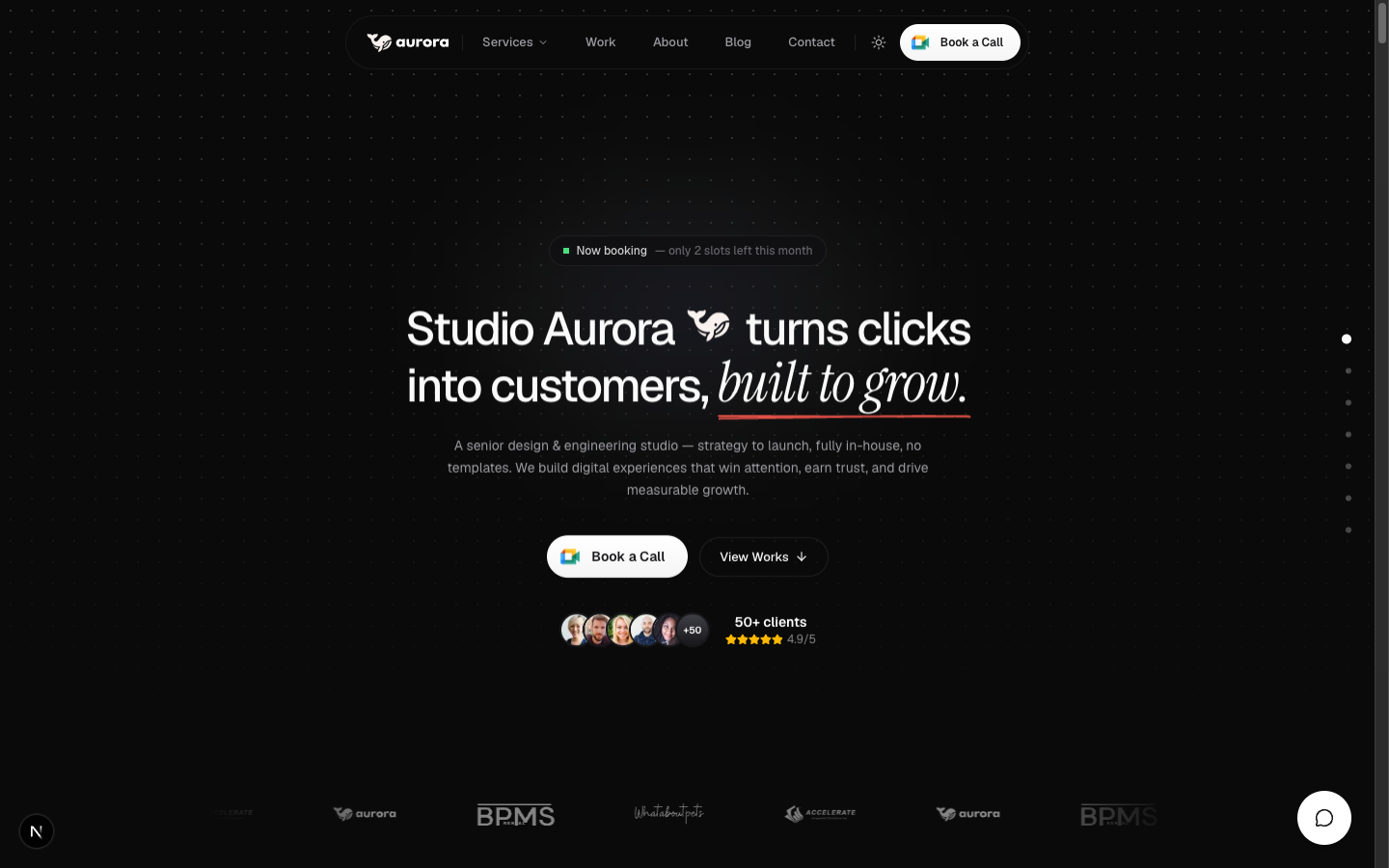
Studio Aurora builds conversion-focused websites for hospitality businesses in the Philippines, including direct booking websites for Philippine properties, resort website design, and hotel website design. A good website does not replace every OTA overnight, but it gives guests a reliable place to book when they already trust you.
Direct website vs Booking.com vs Agoda: the practical comparison
The main difference is that OTAs trade commission for marketplace reach, while direct booking trades lower transaction cost for the responsibility of generating your own traffic. Booking.com and Agoda can expose your property to travelers already searching, but a direct website gives you more control over guest data, packages, pricing, and repeat bookings.
| Factor | Your direct website | Booking.com | Agoda |
|---|---|---|---|
| Typical commission and fees | Near zero platform commission, but payment gateway fees and website costs still apply | Commonly around 15% to 25%, depending on property type, program participation, and market | Commonly around 15% to 25%, depending on model, promotions, and agreement |
| Guest data ownership | Strongest control over email, phone, preferences, consent, and booking history | Limited by platform rules and guest privacy controls | Limited by platform rules and booking model |
| Pricing control | Highest control over packages, add-ons, direct-only perks, and policies | Controlled within OTA rules, rate parity expectations, and marketplace discounts | Controlled within OTA rules, promotions, and merchant pricing structures |
| Reach | Depends on SEO, ads, social, referrals, email, and brand demand | Very strong international and domestic marketplace reach | Strong reach, especially among price-comparison and Asia-focused travelers |
| Payment handling | You choose bank transfer, cards, wallets, payment links, or booking engine payments | Platform may process or facilitate payment depending on setup | Platform may process or facilitate payment depending on setup |
| Brand experience | Full control over photos, copy, room storytelling, FAQs, policies, and upsells | Standardized listing format limits storytelling | Standardized listing format limits storytelling |
The commission line in the table is usually the first thing owners notice, but guest data and pricing control often matter more over time. A property that depends completely on OTAs can fill rooms while still losing the ability to build its own audience.
A direct website also has costs, including design, development, hosting, maintenance, payment processing, and optional booking software. The difference is that those costs can support your own asset instead of paying only for each OTA transaction. If you are comparing website investment against commissions, our guide to website design cost in the Philippines explains typical local ranges for professional builds.
How OTA commissions actually work and what they cost you
OTA commissions are usually a percentage of the room rate or booking value, and Philippine accommodation businesses commonly see general market ranges around 15% to 25% depending on the platform, program, and commercial setup. The exact cost can vary because OTAs may apply different commission models, preferred partner programs, visibility boosts, member discounts, taxes, payment handling arrangements, and promotional tools.
A 15% commission on a ₱8,000 room night is ₱1,200 before considering any extra discounts or payment terms. A 20% commission on a ₱15,000 villa booking is ₱3,000. A 25% effective cost on a discounted package can materially change the margin, especially when cleaning, staff, breakfast, utilities, maintenance, and platform promotions are already included in the price.
OTA commission is not automatically bad. Commission can be reasonable when the OTA introduces a guest who would not otherwise have found your property. Commission becomes more painful when the guest already knows your brand, searches your property name, and still books through an OTA because your own website is unclear, slow, untrusted, or missing a booking option.
The hidden cost is often repeat dependency
Repeat dependency happens when a property keeps paying OTA commission for guests who could have been retained through direct email, messaging, loyalty perks, referral offers, or seasonal packages. A guest who enjoyed a family stay in Bohol may return next summer, but the property pays commission again if the only easy path is an OTA listing.
Philippine properties often have natural repeat and referral opportunities. Families return for holidays, companies book outings, couples refer friends after weddings, and balikbayan guests ask relatives for recommendations. A direct website gives those warm audiences a place to act without sending them back into a marketplace full of competing options.
If you want help estimating whether a direct booking channel makes commercial sense for your property, you can book a free consultation and talk through your room mix, OTA dependency, and likely booking paths.
What you give up on OTAs: guest data, pricing control, and brand context
The biggest trade-off with OTAs is that the platform owns much of the customer journey, which limits how much you learn, how you communicate, and how you present your property. A marketplace listing is convenient, but it is not the same as an owned digital relationship.
Guest data is the most obvious limitation. OTA bookings may restrict direct email use, mask contact details, or limit how you can market to guests after checkout. Data rules exist for valid privacy and platform reasons, but the commercial result is that your property may struggle to build a direct audience.
Pricing control is also narrower on OTAs. You can adjust rates, availability, and promotions, but your choices happen inside platform structures. Member discounts, mobile rates, preferred programs, and competitive pressure can make the final visible price feel less controlled than the rate you intended.
Brand context is the third limitation. OTAs are built for comparison, so every property is displayed beside alternatives. A listing can show photos, amenities, reviews, and policies, but it rarely gives enough room for deeper storytelling about location, service style, room differences, event suitability, accessibility, local experiences, or the best fit for specific guests.
A direct website can answer questions that guests often ask before booking:
- Which room, villa, or suite is best for families, couples, remote workers, or groups?
- What is included in the rate, such as breakfast, transfers, extra beds, or kitchen access?
- What are the exact check-in rules, cancellation terms, child policies, and pet policies?
- What is nearby, how long travel takes, and what transport options are realistic?
- What packages are available for birthdays, retreats, weddings, or long stays?
Clear answers reduce repetitive messages and help serious guests decide faster. Hospitality website content should not only look attractive, because it must remove uncertainty before the guest leaves to compare elsewhere.
What direct booking gives you, and the trade-offs to be honest about
Direct booking gives you more margin control, stronger guest relationships, and better brand presentation, but it only works if you can earn attention and trust outside the OTA marketplace. A website with a booking button is not enough if travelers cannot find it, understand it, or feel safe paying through it.
The strongest benefit is lower commission exposure. Direct bookings usually avoid the 15% to 25% OTA commission range, although payment gateway fees, booking engine costs, bank charges, staff time, and website maintenance still exist. The financial upside is clearest when direct bookings come from repeat guests, referrals, organic search, social media, email, or brand-name searches.
The second benefit is relationship ownership. A direct channel can collect guest preferences with consent, send pre-arrival information, promote future stays, and build a list of people who already know your property. The relationship matters because accommodation is not always a one-time purchase, especially for local leisure travel and family trips in the Philippines.
The third benefit is flexibility. A direct website can sell room-only rates, breakfast bundles, barkada packages, weekday promos, corporate retreat pages, gift vouchers, add-ons, private transfers, or long-stay offers. OTAs can support some variations, but your own site can explain them in a way that is specific to your property.
Direct booking also has real trade-offs. You need traffic from SEO, social media, paid ads, referrals, Google Business Profile, email, and repeat guests. You need a trustworthy design, mobile-first speed, clear policies, secure payments, and fast response operations. You also need to keep availability accurate, especially if you sell on multiple channels.
A useful direct booking website usually includes three layers:
- A clear property website with rooms, amenities, location, policies, FAQs, and reasons to book direct.
- A booking flow that lets guests check availability, request a reservation, or pay a deposit without confusion.
- A traffic plan using search, Google Business Profile, social proof, social media, and referral touchpoints.
For owners of condos, villas, and small rentals, our guide to websites for Airbnb hosts in the Philippines explains how direct booking can work alongside platform listings without pretending every host should leave marketplaces completely.
Want this done right, without the guesswork?
Book a free call and we'll map out exactly how we'd approach your project.
The smart hybrid strategy: use OTAs for discovery and direct for loyalty
The smartest strategy for many Philippine properties is to keep OTAs for first-time discovery while making direct booking the easiest path for repeat, referral, and brand-aware guests. A hybrid strategy recognizes that Booking.com and Agoda are powerful demand sources, but they should not be the only place guests can confidently reserve.
OTAs are useful near the top of the funnel. A traveler searching for hotels in Cebu, beach resorts in Batangas, or Bohol family rooms may not know your property yet. An OTA listing can put your rooms in front of that traveler during comparison.
Your website becomes more important after interest is created. A guest may search your property name, check photos on social media, read Google reviews, compare policies, and look for a better package. A strong direct site can convert that intent before the guest returns to an OTA.
A hybrid channel strategy often looks like this:
| Guest type | Best channel focus | Practical reason |
|---|---|---|
| First-time international traveler | OTA plus website validation | OTAs help discovery, while the website builds trust and explains details |
| Domestic family guest | Direct website and social referral | Families often ask many questions and value clear packages |
| Repeat guest | Direct booking | The guest already knows the property, so commission is less necessary |
| Corporate or retreat organizer | Direct inquiry flow | Group needs require custom terms, meals, activities, and billing |
| Last-minute bargain shopper | OTA and limited promos | Marketplace visibility can help fill gaps without changing the whole brand position |
Rate strategy should be handled carefully. Many properties avoid publicly undercutting OTA rates because of contractual and channel relationship concerns. A direct site can still add value through perks that do not simply copy a lower price, such as flexible check-in when available, welcome drinks, room preference requests, direct support, breakfast inclusions, or repeat-guest benefits.
The goal is not to fight OTAs on every booking. The goal is to stop sending every guest, including warm leads, repeat visitors, and referrals, into a commission-based comparison environment. If your property is ready to build that owned channel, you can tell us about your project and we can discuss a practical direct booking setup.
Clearly labelled example: what direct booking savings can look like
This example shows how OTA commission can affect gross booking value, but it is an illustration only and not a promise of savings for any specific property. Actual results depend on occupancy, rate mix, OTA contracts, payment fees, direct traffic, staffing, seasonality, and how well the direct booking flow converts.
Assume a small Philippine resort receives 20 bookings in a month at an average booking value of ₱12,000. The gross booking value is ₱240,000. If all bookings come through an OTA at a 20% commission, the commission cost is ₱48,000.
If 5 of those 20 bookings shift to direct while the average booking value stays at ₱12,000, the shifted direct booking value is ₱60,000. At a 20% commission that would otherwise have applied, the avoided commission is ₱12,000 before considering payment processing, software, marketing, and website operating costs.
| Scenario | Booking value | Assumed OTA commission | Commission cost before direct costs |
|---|---|---|---|
| 20 OTA bookings at ₱12,000 each | ₱240,000 | 20% | ₱48,000 |
| 15 OTA bookings, 5 direct bookings | ₱240,000 total | 20% on OTA portion only | ₱36,000 |
| Illustrative avoided commission | ₱60,000 shifted to direct | 20% avoided on shifted portion | ₱12,000 |
The example is useful because it shows the lever. Direct booking does not need to replace every OTA booking to matter. Even a modest shift among repeat guests, referrals, and brand-search visitors can reduce commission exposure over time.
The example is incomplete if website and marketing costs are ignored. A proper direct channel may require professional design, custom development, booking software, hosting, analytics, copywriting, photography, and ongoing optimization. Our blog post on custom web development versus template builders explains why the right approach depends on complexity, brand expectations, and how important conversion quality is to the business.
How to set up a direct booking channel without breaking your OTA strategy
A direct booking channel should be set up as a reliable owned path that complements OTAs, not as a sudden replacement that creates availability problems or guest confusion. The safest approach is to build the website, connect the reservation process, measure results, and gradually move warm demand into direct channels.
Start with positioning before software. A resort, hotel, villa, or serviced apartment needs a clear reason for guests to book direct. The reason may be better communication, exclusive packages, flexible arrangements when available, local support, direct payment options, or a more complete explanation of rooms and policies.
The booking method should match the property. A small private villa may start with an inquiry form, calendar request, and deposit link. A larger hotel may need a booking engine, channel manager, payment gateway, promo codes, room inventory, and integration with property management workflows.
A practical setup sequence is:
- Audit current OTA bookings, repeat guests, referral sources, Google searches, and common guest questions.
- Build or improve the website with mobile-first room pages, rates or package guidance, policies, location content, and trust signals.
- Add a booking engine, reservation form, or direct inquiry flow that fits your operations.
- Connect analytics so direct inquiries, booking clicks, calls, messages, and payment starts can be measured.
- Create post-stay and referral touchpoints that encourage future direct bookings without violating platform rules.
Search visibility matters because direct booking depends on being found. A guest who searches your property name should find your official site quickly, and a traveler searching for your destination should find useful content when your property is a good match. Our guide on why your website does not show up on Google explains common visibility problems that affect local businesses.
Booking flow quality also matters because accommodation purchases share many issues with ecommerce checkout. Guests abandon when forms are too long, policies are unclear, payment options feel risky, or the mobile experience is slow. The principles in our guide to checkout optimization also apply to reservation forms and booking engines.
When direct booking is most worth building first
Direct booking is most worth building first when your property already has demand that is warm, repeatable, or brand-aware. A property with zero awareness may need OTAs and marketing before direct booking becomes meaningful, but a property with referrals, repeat guests, social followers, Google searches, and event inquiries is often leaving value on the table without an owned booking path.
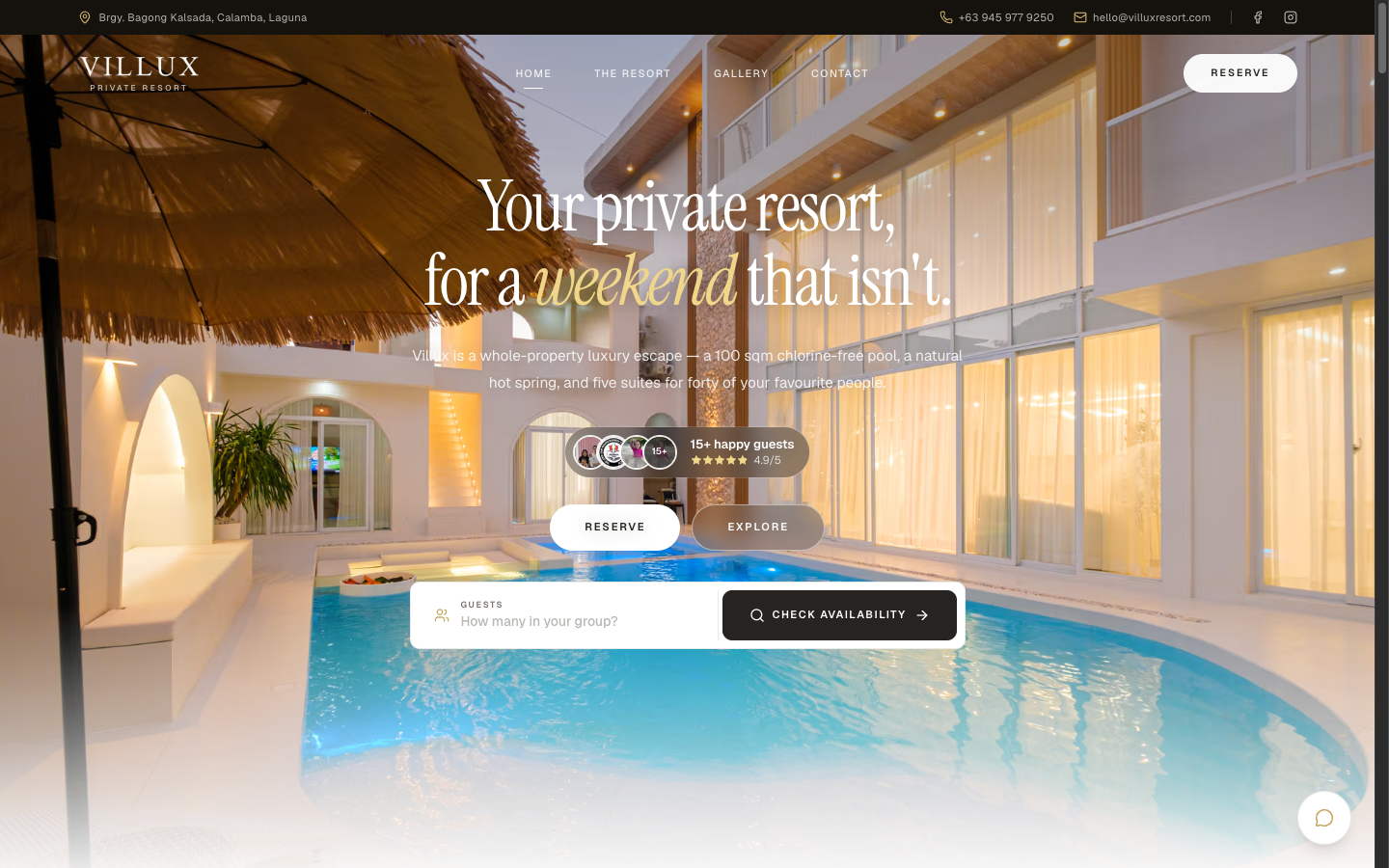
Philippine resorts often benefit from direct websites because guests need more context before committing. Room categories, beach quality, transport, group capacity, corkage, meal plans, day tours, and event rules are hard to explain inside a short OTA listing. A dedicated resort website for the Philippine market can organize those details around how people actually choose a stay.
Hotels often benefit when direct booking supports corporate accounts, repeat business travelers, local staycations, function rooms, and seasonal offers. A strong hotel website design in the Philippines can separate room booking from events, dining, meetings, and long-stay inquiries so each guest type has a clearer path.
Vacation rentals and Airbnb-style hosts often benefit when they have unique homes, repeat groups, or high fees on platform bookings. A vacation rental website in the Philippines can present house rules, sleeping arrangements, parking, kitchen details, pet rules, and exact location guidance more clearly than a generic listing.
Direct booking should not ignore operational reality. If your team cannot answer inquiries quickly, update availability, handle payments, or honor policies consistently, a direct channel can create guest frustration. A website should match the service process behind it.
A balanced goal is simple: let OTAs introduce new guests, let your website convert people who already trust you, and let your operations keep the promise made online. If you want a direct booking website designed around Philippine hospitality buying behavior, book a free consultation and share what type of property you operate.
Selected work
Frequently asked questions
Is direct booking better than Booking.com and Agoda?
Direct booking is better for margin control, guest data, repeat stays, and brand presentation, while Booking.com and Agoda are often better for marketplace reach and first-time discovery. Many Philippine properties benefit from using both.
How much commission do Booking.com and Agoda usually charge?
OTA commission commonly falls around 15% to 25% in general market discussions, but the exact rate depends on the property, platform agreement, promotions, payment model, and visibility programs. Owners should check their own contracts and effective net revenue.
Does direct booking mean there are no fees?
Direct booking usually avoids OTA platform commission, but it is not completely free. Properties may still pay for payment gateway fees, booking software, hosting, website maintenance, marketing, staff time, and integrations.
Can I offer a cheaper rate on my own website than on OTAs?
Some properties use direct-only value instead of a visibly lower public rate because OTA contracts and rate parity rules can affect pricing. Direct perks may include flexible arrangements when available, add-ons, better communication, or package inclusions.
What is the best direct booking setup for a small resort in the Philippines?
A small resort can often start with a mobile-friendly website, clear room pages, FAQs, policies, location content, a direct inquiry or booking form, deposit payment options, and analytics. Larger operations may need a booking engine and channel manager.
Will a direct booking website replace my OTA listings?
A direct booking website does not need to replace OTA listings immediately. A safer strategy is to keep OTAs for discovery while encouraging repeat guests, referrals, social followers, and brand-search visitors to book direct.
How do I get guests to book direct instead of using OTAs?
Guests are more likely to book direct when the official website is easy to find, loads fast on mobile, explains rooms and policies clearly, offers a trustworthy booking or inquiry flow, and gives a clear reason to book directly.
Is direct booking useful for Airbnb hosts and vacation rentals?
Direct booking can be useful for Airbnb hosts and vacation rentals with repeat guests, referrals, unique properties, or high platform fee exposure. Hosts should still manage availability carefully and comply with platform rules when communicating with platform guests.
Explore more
Web Design Philippines
Studio Aurora designs and builds high-converting websites for businesses across the Philippines. Modern, fast, and engineered to turn visitors into customers, not just look pretty.
Web Design Manila
Manila moves fast and the competition is fierce. Studio Aurora builds websites that help Metro Manila businesses stand out, load instantly, and convert the traffic they're already paying for.
Web Design Cebu
Cebu's businesses are growing fast, in tourism, retail, services, and tech. Studio Aurora builds modern, high-converting websites that help Cebu brands compete locally and reach customers nationwide.
Web Design Agency Philippines
Freelancers vanish. Templates age. Studio Aurora is a web design agency that delivers senior design and development, a real process, and a site you actually own, for businesses across the Philippines.

Let's build something that works.
Tell us about your project and we'll map out exactly how we'd approach it. No pressure, no jargon.