
Business · 9 min read
E-Commerce Website Design That Actually Converts Browsers Into Buyers
Why your own e-commerce store converts better than marketplace listings, the features that lift sales, and what an online store really costs in the Philippines.

Share

Key takeaways
- An e-commerce website lets you own customer relationships instead of leaving them with Shopee, Lazada, or social marketplaces.
- Email and SMS capture, customer accounts, and post-purchase campaigns turn one-time buyers into repeat customers and higher lifetime value.
- Strong product photos, clear descriptions, and honest reviews directly raise conversion rates by removing buyer doubt.
- Checkout tuning (fewer fields, guest checkout, GCash/Maya/COD, cart recovery) lifts sales from the traffic you already pay for.
- E-commerce websites in the Philippines typically cost ₱150,000 to ₱600,000+, while marketplace fees take a cut of every sale forever.
You sell online already. Maybe through Shopee or Lazada, maybe through Instagram and Facebook DMs, maybe through all of them at once. So the honest question is whether your own e-commerce website is worth building when the marketplaces are already moving stock.
For most growing Philippine brands, the answer is yes. An e-commerce website is not a prettier version of a marketplace listing. It is a conversion tool you actually own, where every element from the product photos to the checkout exists to turn a browser into a buyer, and then into a repeat buyer. This guide covers what separates a store that converts from a digital catalogue that just sits there, with honest Philippine pricing throughout. For the full cost picture, see our e-commerce website cost guide for the Philippines.
Why is selling only through marketplaces a problem?
Selling only through Shopee, Lazada, or social DMs means you do not own your customers. The marketplace owns them. A Shopee buyer is a Shopee customer first. They found your product through Shopee search, and when they want to reorder, they go back to Shopee, not to you. They are not on your email list, you cannot message them directly, and if the platform changes its algorithm or raises its fees, your visibility can drop overnight with nothing you can do about it.
Your own website changes who owns the relationship. The customer gives you their email or mobile number, you can reach them directly, and the next sale does not depend on a platform deciding to show your listing. The marketplaces are still useful as a distribution channel. They just should not be the only place your business lives.
How does owning the relationship increase customer value?
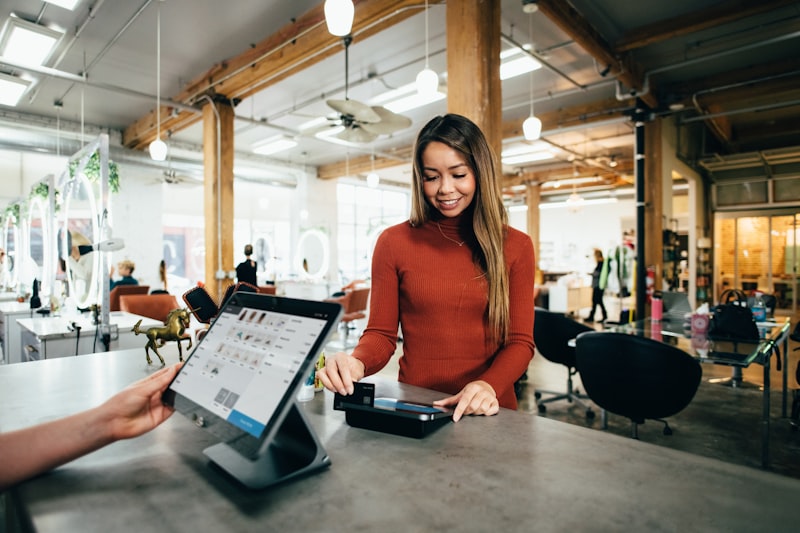
Owning the customer relationship turns one-time transactions into repeat revenue, which is where the real margin lives. A buyer who finds you on a marketplace is usually a single purchase. A buyer who lands on your website, gives you their email, and gets a good post-purchase experience can come back five, ten, or twenty times. The lifetime value of a repeat customer dwarfs the profit on a single sale, and that gap is the whole reason to build your own store.
Your website earns that repeat business through tools that simply do not exist on a marketplace listing:
- Email or SMS capture at checkout, so you can reach buyers again
- Customer accounts that remember order history and preferences
- Post-purchase follow-ups, cross-sells, and loyalty rewards
- Subscribe-and-save or repeat-order incentives
- Reviews and customer stories that build community around the brand
None of this is possible when the platform sits between you and the buyer. For a wider view of why this matters, read why your website is your most important sales asset.
Why does branding sell better on your own site?
On a marketplace, you are one of hundreds of near-identical listings, and the cheapest one usually wins. On your own website, price stops being the only thing a shopper sees. You have room to explain who you are, why you make what you make, and what makes it worth more than the generic alternative. A bag on a marketplace competes on price. A bag from a brand with a clear story, local sourcing, or a cause behind it can command a premium, because the customer is buying the story as much as the product.
Your website is the only place you fully control that story, which is why it is also the place where you can justify charging more than the race-to-the-bottom listings around you.
Why does product presentation drive conversions?
E-commerce conversions live or die on how well you present the product, because the customer cannot touch it before buying. Online, the photos and copy do the job the physical product would do in a store. Thin presentation creates doubt, and doubt kills the sale. Strong presentation removes the hesitation and the customer buys.
A page that converts gives the shopper what they need to feel certain: multiple high-quality photos from different angles, lifestyle shots showing the product in real use, clear details on materials, sizing, and care, honest customer reviews, and a short video where it helps. Marketplaces cap how much of this you can do. Your own website lets you present each product properly, and better presentation is one of the most direct levers you have on conversion rate.
What checkout improvements actually lift sales?
The single biggest controllable factor in e-commerce conversion is the checkout, because that is where motivated buyers abandon. Marketplace checkouts are fixed. Your own checkout can be tuned to your customers, and a few proven changes tend to move the needle most: fewer form fields, a guest checkout option, locally relevant payment methods like GCash, Maya, and cash on delivery, and abandoned-cart recovery emails. Upsells and cross-sells at checkout raise average order value without needing more traffic.
The point of optimising checkout is leverage. You already paid to get the visitor there through ads, content, or social. A smoother checkout converts more of that existing traffic, which means more revenue from the same marketing spend. That is also why a serious build bakes these features in rather than treating them as extras.
How much does an e-commerce website cost in the Philippines?
E-commerce websites in the Philippines typically run from ₱150,000 to ₱600,000 or more, depending on catalogue size, the integrations you need, and how custom the design and checkout are. Here is how that sits against the other common build tiers:
| Build type | Typical price (PHP) | USD equivalent | Best for |
|---|---|---|---|
| Template store | ₱15,000 to ₱50,000 | $270 to $900 | Testing an idea, very small catalogue |
| Professional business site | ₱50,000 to ₱150,000 | $900 to $2,700 | SMEs needing credibility and lead capture |
| E-commerce store | ₱150,000 to ₱600,000+ | $2,700 to $10,800+ | Real online stores with payments and integrations |
| Custom platform | ₱300,000 to ₱800,000+ | $5,400 to $14,400+ | Marketplaces, subscriptions, complex logic |
A cheap template store can get you live quickly, but it competes on looks with every other store on the same theme and rarely has the conversion tooling above. For the full breakdown by store type and integration, see our e-commerce website cost guide, and for the wider market, our web design cost guide for the Philippines.
How do marketplace fees compare to owning a website?
Marketplace commissions and fees take a percentage of every sale, for as long as you sell there. A website is a fixed cost regardless of how much revenue flows through it. As your volume grows, the percentage the platforms take grows with it, while your own store keeps that margin. You also gain room to add the features marketplaces will never offer, from advanced personalisation to subscription models, which becomes the real infrastructure of the business rather than a rented stall.
Keep the marketplaces as a way to get discovered. Just make sure the customers you win there end up somewhere you actually own.
Frequently asked questions
Do I still need a website if I sell well on Shopee and Lazada?
Yes, if you want to own the customer relationship and grow margin. The marketplaces are good for discovery, but they keep the customer, take a cut of every sale, and can change the rules anytime. Your own store lets you capture emails, sell again at no platform fee, and build a brand that does not depend on a single algorithm.
How much does an e-commerce website cost in the Philippines?
E-commerce builds in the Philippines generally range from ₱150,000 to ₱600,000 or more (around $2,700 to $10,800+), depending on catalogue size, payment and shipping integrations, and how custom the design is. Simpler template stores can start lower, but usually lack the conversion features that justify a real build.
What payment methods should a Philippine store support?
A store selling to Philippine customers should support the methods buyers actually use: GCash, Maya, card payments, bank transfer, and cash on delivery. Offering cash on delivery in particular tends to reduce checkout hesitation for first-time buyers who are not yet comfortable paying online.
Will my own website convert better than a marketplace listing?
It can, because you control the full experience. Marketplace listings convert within fixed templates and shared traffic. Your own site lets you tune product presentation, trust signals, and the checkout to your specific customers, which is where most conversion gains come from.
Can I run my own website and marketplaces at the same time?
Yes, and most growing brands do. Use the marketplaces for reach and discovery, and use your own website as the place where repeat customers, loyalty, and higher-margin sales happen. They work best together rather than as an either-or choice.
If you are ready to turn browsers into buyers with a store built to convert, book a call and we will walk you through what your specific build would cost. You can also see how we have helped other businesses or explore our services.
Related service
Web design services in the PhilippinesFrequently asked questions
Do I still need a website if I sell well on Shopee and Lazada?
Yes, if you want to own the customer relationship and grow margin. The marketplaces are good for discovery, but they keep the customer, take a cut of every sale, and can change the rules anytime. Your own store lets you capture emails, sell again at no platform fee, and build a brand that does not depend on a single algorithm.
How much does an e-commerce website cost in the Philippines?
E-commerce builds in the Philippines generally range from ₱150,000 to ₱600,000 or more (around $2,700 to $10,800+), depending on catalogue size, payment and shipping integrations, and how custom the design is. Simpler template stores can start lower, but usually lack the conversion features that justify a real build.
What payment methods should a Philippine store support?
A store selling to Philippine customers should support the methods buyers actually use: GCash, Maya, card payments, bank transfer, and cash on delivery. Offering cash on delivery in particular tends to reduce checkout hesitation for first-time buyers who are not yet comfortable paying online.
Will my own website convert better than a marketplace listing?
It can, because you control the full experience. Marketplace listings convert within fixed templates and shared traffic. Your own site lets you tune product presentation, trust signals, and the checkout to your specific customers, which is where most conversion gains come from.
Can I run my own website and marketplaces at the same time?
Yes, and most growing brands do. Use the marketplaces for reach and discovery, and use your own website as the place where repeat customers, loyalty, and higher-margin sales happen. They work best together rather than as an either-or choice.
Traffic but
no conversions?
We design sites that turn visitors into customers. Let's talk about yours.
Get in touchPillar guideDevelopment · Feb 18
What Makes a Good Homepage: The 9 Elements That Actually Convert Visitors
Resources · Apr 28
How to Write Website Copy That Converts: A Framework for Every Page
Development · Apr 7
Microinteractions in Web Design: When Small Animations Make a Big UX Difference
Business · Mar 29