
Business · 9 min read
5 Signs Your Website Is Outdated (And What It’s Really Costing You)
An outdated site bleeds revenue quietly. Here are 5 signs yours is costing you customers, and what a modern website should look like in 2026.

Share

Key takeaways
- If your site is not genuinely mobile-friendly, you lose most visitors before they read a word.
- Slow load times tank both conversions and rankings, so speed is a revenue issue, not a technical detail.
- Needing a developer for every small edit means your site is holding your business back.
- A dated design erodes trust in the first seconds, since visitors judge credibility almost instantly.
- Traffic without conversions points to a UX problem, and an outdated site bleeds revenue quietly every month.
Most businesses do not realize their website is costing them money until the damage has been compounding for months. The leads slow, the bounce rate creeps up, a competitor pulls ahead, and only then does anyone connect it back to the site. Your website is usually the first interaction a customer has with your business, and first impressions form fast. If a visitor's first read is "this looks outdated," they leave for a competitor whose site does not. If yours was built several years ago and has not had a real overhaul since, there is a strong chance it is quietly working against you right now. Here are five signs you cannot afford to ignore, and what they actually cost.
How do I know if my website is outdated?
Your website is outdated if it fails on mobile, loads slowly, requires a developer for small edits, looks visually dated, or pulls traffic without converting it. Any one of these is a problem; several together mean a redesign is overdue. Below, each sign comes with the real cost behind it.
Sign 1: Is your site genuinely mobile-friendly?
If your site is not genuinely usable on a phone, you are losing the majority of your audience before they see what you offer, because most web traffic now comes from mobile devices. "It technically works on mobile" does not count. If visitors have to pinch and zoom to read, if buttons are too small to tap, if the navigation is a struggle on a small screen, that is a desktop site shrunk down, not a mobile experience.
Google reinforces this with mobile-first indexing, meaning it primarily uses the mobile version of your site to rank and index you. A poor mobile experience drags down your search visibility across the board, even for people searching on a desktop. True responsive design rethinks the experience for how people use phones: thumb-friendly navigation, a streamlined content hierarchy, fast-loading assets, and tap targets that do not demand precision. Any common UX mistakes you are making are magnified on mobile, where patience for friction is near zero.
Sign 2: Does your site load fast enough?
If your site takes more than a few seconds to load, you are losing a large share of visitors before they read a single word, because speed is the baseline expectation now, not a bonus. Slow load times push people away and drag down rankings at the same time, so the cost shows up twice: in lost visitors and in reduced visibility.
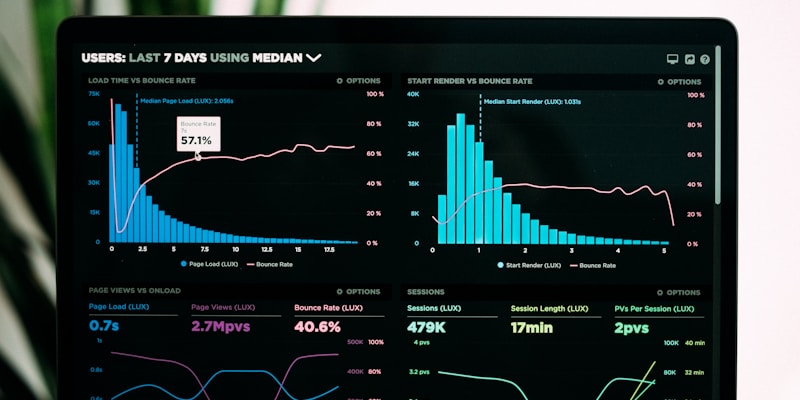
The usual culprits are predictable and fixable: full-resolution images served where compressed versions would look identical, bloated plugins added over years without an audit, cheap shared hosting that buckles under traffic, render-blocking scripts that hold up the page, and no caching strategy, forcing browsers to re-download everything each visit. You can check your own site with Google's PageSpeed Insights. A low mobile score is a clear signal that speed is eating into your results, and that the fix is usually architectural rather than cosmetic.
Sign 3: Can you update the site yourself?
If a simple text change requires a support ticket to a developer, your content management system is broken. Updating your hours, fixing a typo, or adding a service should take minutes, not days of waiting for someone to find time. A modern site should let you change copy, swap images, publish posts, and update pricing without touching code.
This is a business problem, not just an inconvenience. When updates are painful, they stop happening. Outdated information stays live for weeks: a "latest news" post from two years ago, a team page listing people who left, pricing you changed quarters ago. Every piece of stale content quietly erodes trust with the visitors who notice, and they do notice. Many businesses end up here because they were sold a DIY website builder or a heavily customized theme that promised control and delivered fragility. A properly built site gives you real editorial control without the risk of breaking everything.
Sign 4: Does your design look dated?
A dated design costs you credibility in the first seconds of a visit, before anyone reads your copy or sees your pricing. Web design moves quickly, and certain hallmarks instantly age a business: auto-rotating homepage image sliders full of generic stock photos, tiny body text crammed under oversized hero banners, hamburger menus hiding navigation on full-width desktop screens, parallax effects with no purpose, and animations sliding in from every direction.
Visitors judge a site's credibility almost instantly and use that judgment to decide whether your business looks legitimate, especially for B2B buyers, where design weighs heavily on whether a company seems trustworthy at all. Modern design in 2026 leans on restraint: generous whitespace, intentional typography, a disciplined color palette, and layouts that guide the eye rather than overwhelm it. How those choices influence whether visitors convert or bounce is worth understanding, because your competitors are already paying attention to it.
Sign 5: Are you getting traffic but no conversions?
Traffic without conversions is the most expensive problem on this list and the easiest to miss, because the analytics look healthy while the site quietly fails to close. You are paying for those visitors through SEO, ads, and content, then watching them leave empty-handed, like a store full of people who never buy.
The symptoms are consistent across industries: missing or weak calls-to-action so visitors do not know what to do next, confusing navigation with too many options and dead-end pages, no social proof or trust signals, contact information buried where people have to hunt for it, and forms that ask for too much. A redesign focused specifically on conversion, not just looks, can meaningfully lift lead generation without adding a single new visitor. That happens when you stop treating the site as a brochure and start treating it as your hardest-working salesperson.
What is the real cost of keeping an outdated website?
The real cost is the customers you never close on traffic you already paid to attract, which usually dwarfs the cost of fixing the site. Picture two sites pulling the same traffic: one converts poorly because it is slow, dated, and confusing, the other converts well because it is fast, clear, and built around action. Same visitors, very different revenue. The gap rarely shows on launch day; it shows over the months and years that follow.

And the direct conversion gap is only part of it. There is the credibility lost with prospects who visit once and never return, the search rankings slipping quarter after quarter on a slow, non-mobile site, the referral impressions wasted when someone shares a link to a site that misrepresents your quality, and even the talent you lose when candidates judge your company by its site. The hidden costs of an underperforming website extend far beyond what shows up in your dashboard. If you are weighing whether to refresh or rebuild, our guide on redesign versus a new build walks through how to choose.
What should a modern website look like in 2026?
A modern website in 2026 is defined by substance, not effects. It starts with performance-first architecture: fast load times, optimized assets, and infrastructure that scales, because speed is the foundation everything else sits on. It uses clean, intentional design, with generous whitespace, purposeful typography, and a visual hierarchy that guides visitors toward action.
Beyond that, every page has a job and moves the visitor closer to a decision, with nothing decorative for its own sake. Accessibility is built in through semantic HTML, keyboard navigation, screen reader support, and sufficient contrast, which is simply good engineering that helps everyone. Content management lets your team update the site without a developer, and SEO is structural rather than bolted on, with clean URLs, proper heading hierarchy, schema markup, and healthy Core Web Vitals. The tools matter less than the strategy, since a beautifully built site with no conversion plan is just expensive digital art. For honest pricing on what this costs, see our web design cost guide for the Philippines.
Frequently asked questions
How do I know if my website needs a redesign? Watch for a poor mobile experience, slow load times, an inability to make edits yourself, a dated look, and traffic that does not convert. Any of these signals it is time.
How often should a website be redesigned? Roughly every three to four years, or sooner if it is not mobile-friendly, slow, hard to update, or no longer converting visitors into customers.
Does an outdated website really affect sales? Yes. Slow, dated, or hard-to-use sites raise bounce rates, hurt rankings, and send potential customers to competitors, which is a measurable revenue loss over time.
What should a modern website look like in 2026? Fast, mobile-first, easy to update, accessible, and conversion-focused, built on current technology rather than left as a static brochure.
Is a redesign or a full rebuild better for an outdated site? It depends on the foundation. A refresh works if the structure is sound, while a rebuild is better when the site is slow, insecure, or impossible to maintain.
How much does fixing an outdated site cost in the Philippines? A focused redesign generally runs ₱50,000 to ₱150,000 ($900 to $2,700), while a full custom rebuild lands around ₱150,000 to ₱350,000 ($2,700 to $6,300) depending on scope.
If any of these signs sound familiar, you already know the answer, and the only real question is how much longer you are willing to pay the cost of pretending the site is fine. A proper redesign is not an expense; it is the highest-return investment many businesses can make, because it multiplies the return on every other peso spent on marketing. If you are ready to stop losing leads to an outdated site, book a call and we will give you an honest read on what yours needs.
Related service
Web design services in the PhilippinesFrequently asked questions
How do I know if my website needs a redesign?
Watch for a poor mobile experience, slow load times, an inability to make edits yourself, a dated look, and traffic that does not convert. Any of these signals it is time.
How often should a website be redesigned?
Roughly every three to four years, or sooner if it is not mobile-friendly, slow, hard to update, or no longer converting visitors into customers.
Does an outdated website really affect sales?
Yes. Slow, dated, or hard-to-use sites raise bounce rates, hurt rankings, and send potential customers to competitors, which is a measurable revenue loss over time.
What should a modern website look like in 2026?
Fast, mobile-first, easy to update, accessible, and conversion-focused, built on current technology rather than left as a static brochure.
Is a redesign or a full rebuild better for an outdated site?
It depends on the foundation. A refresh works if the structure is sound, while a rebuild is better when the site is slow, insecure, or impossible to maintain.
How much does fixing an outdated site cost in the Philippines?
A focused redesign generally runs ₱50,000 to ₱150,000 ($900 to $2,700), while a full custom rebuild lands around ₱150,000 to ₱350,000 ($2,700 to $6,300) depending on scope.
Time for
a redesign?
Let's turn your outdated site into one that works as hard as you do.
Start your redesignPillar guideBusiness · Feb 13
Website Redesign vs. New Build: How to Know Which One You Actually Need
Business · Apr 18
The Website Lifecycle: When to Redesign, Refresh, or Leave It Alone
Resources · Feb 19
How to Plan a Website Redesign Without Losing Your Search Rankings
Business · Feb 16